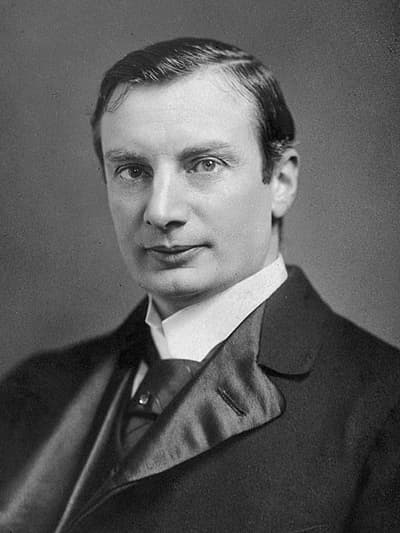
In plague-struck Bombay, Waldemar Haffkine made his vaccine into something more dangerous than a laboratory idea. Before asking anyone else to accept it, he took the dose himself.[1]
Waldemar Haffkine, already known for an anti-cholera vaccine, developed a bubonic plague vaccine during the 1896 Bombay epidemic and tested it on himself before using it in India.[1]
The request came during a crisis. In 1896, bubonic plague struck Bombay, and the government turned to Haffkine, a bacteriologist educated in the Russian Empire who had later worked at the Pasteur Institute in Paris.[1] He arrived with no guarantee that frightened people would trust a new injection. What he did have was a record of placing his own body inside his experiments.
Before plague, there had been cholera. At the Pasteur Institute, Haffkine developed an anti-cholera vaccine, then took it to India, where he tried it successfully.[1] In the 1890s, that kind of work did not move neatly from bench to clinic. A vaccine had to survive the laboratory, the epidemic, and the suspicions of the people being asked to receive it.
Three months in a plague city
The Bombay work ground on for about three months before the plague preparation was ready. The pressure showed in the small staff around him: one assistant had a nervous breakdown, and two others quit.[1] The detail gives the episode its human scale. Outside the laboratory, plague was moving through the city. Inside, the work was tiring out the people meant to help stop it.
Haffkine answered with the same personal test he had used before. He became known as the first microbiologist to develop and use vaccines against both cholera and bubonic plague, and he tested the vaccines on himself.[1] The act was scientific, but it was also public in a quiet way. In a vaccination campaign, confidence could begin with the sight of the inventor’s own arm.
The vaccine did not make plague disappear. No single preparation could do that in Bombay in 1896. It did give public health workers another tool at a moment when infection could seem like fate, and it helped fix Haffkine’s name to one of the early turning points in plague vaccination.[1]
The outsider called indispensable
Haffkine had already lived across borders before Bombay called. He was born into a Jewish family in Odessa, educated at Imperial Novorossiya University, and later moved through Switzerland and France before his work at the Pasteur Institute.[1] By the time he entered the plague emergency in India, his career had passed through places that often treated nationality, religion, and status as hard lines.
Recognition followed the plague work quickly. In Queen Victoria’s 1897 Diamond Jubilee Honours, Haffkine was appointed Companion of the Order of the Indian Empire.[1] The Jewish Chronicle noticed the unlikely symbolism, describing “a Ukraine Jew, trained in the schools of European science,” saving the lives of Hindus and Mohammedans and being decorated by the British crown.[1]
Joseph Lister, the surgeon whose name was tied to antiseptic medicine, called Haffkine “a saviour of humanity.”[1] The phrase is grand enough to feel distant now. The sharper image is smaller: a plague vaccine after months of exhausting work, a city in fear, and Haffkine offering his own exposed arm first.[1]