Penn Jillette was wearing shorts and a sports shirt, which should have made him a terrible target. No jacket. No crowded pockets. No easy hiding places. At a Las Vegas convention for magicians, he asked Apollo Robbins to steal something anyway. Robbins said no, then offered to do a trick with Jillette’s ring and a pen.[1]
Apollo Robbins, a Las Vegas theatrical pickpocket, became famous after he lifted items from Jimmy Carter’s Secret Service detail in 2001, including Carter’s itinerary, agents’ badges, a watch, and the keys to the Carter motorcade.[1]
Jillette took off his ring, placed it on a piece of paper, unclipped a pen from his shirt, and leaned in to trace the circle. Then he stopped. His face went pale. Robbins was holding up the ink cartridge from Jillette’s own pen, a thin little cylinder removed while everyone thought the trick was happening somewhere else.[1]
The audience around them was not made up of easy marks. These were magicians, people whose work depends on noticing false moves. Jillette had not lost a wallet or been bumped in a crowd. The object that vanished was not even the pen. It was the working piece inside it.[1]
The Pickpocket Who Gave Everything Back
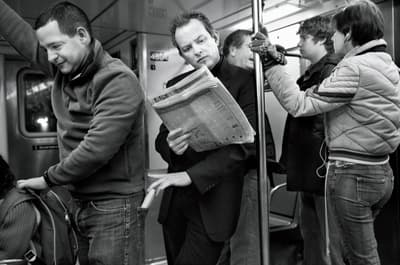
Robbins is known in the trade as a theatrical pickpocket, a performer who takes things from jackets, pants, purses, wrists, fingers, and necks, then returns them in ways designed to make the victim laugh, freeze, or replay the last few seconds in disbelief.[1] Adam Green reported that Robbins, thirty-eight at the time of his New Yorker profile, was regarded among peers as perhaps the best in the world at that strange branch of entertainment.[1]
Famous people became part of the act too. According to Green, Robbins took and returned Jennifer Garner’s engagement ring, Charles Barkley’s cash, and a Patek Philippe watch belonging to Ace Greenberg, the former chairman of Bear Stearns.[1]
Robbins had a line for the moment when he displayed a wallet or watch he had just removed: “Am I being paid enough to give it back?”[1] It worked because everyone in the room already knew the answer. The object was safe. The uneasy part was realizing how briefly it had stopped being yours.
The Jimmy Carter Detail
The story that carried Robbins beyond magic circles happened in 2001, while former President Jimmy Carter was at dinner. Robbins struck up a conversation with members of Carter’s Secret Service detail. Within a few minutes, he had emptied the agents’ pockets of almost everything except their guns.[1]
He produced a copy of Carter’s itinerary. When an agent snatched it back, Robbins told him, “You don’t have the authorization to see that!” The agent reached for his badge, and Robbins produced that too, handing it back. Then Robbins turned to the head of the detail and returned his watch, his badge, and the keys to the Carter motorcade.[1]
The scene sounds like a security parable, but Robbins was not demonstrating lockpicks, forged credentials, or gadgets. He was demonstrating attention. The people in front of him were trained to watch for danger, and still their hands, eyes, and assumptions could be guided toward the wrong moment. The object disappeared during a conversation, not during a chase.
That is why his work has interested more than nightclub audiences. Green reported that psychiatrists, neuroscientists, and the military have studied Robbins’s methods for what they reveal about human attention.[1] Economist Paul Romer later wrote that time with Robbins leaves a person newly aware that in interactions with other people, there are “unknown unknowns” we fail to allow for.[2]
Robbins’s thefts are theatrical because the ending is built in. The badge comes back. The watch comes back. The keys come back. But for a few seconds, the world has been rearranged. A Secret Service agent reaches toward the place where authority is supposed to be, and Apollo Robbins is already holding it in his hand.