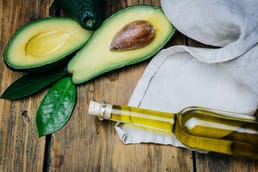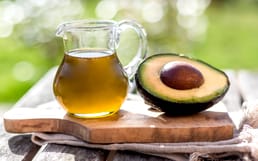
A shopper standing in the cooking oil aisle has almost nothing to go on but a label. Extra virgin. Virgin. Refined. Avocado oil. The bottle may be dark glass or clear plastic, expensive or ordinary, stamped with a best-by date that looks like a promise.
In a UC Davis study of 22 avocado oil samples sold in the United States, 82 percent were either rancid before their listed expiration date or appeared to be mixed with cheaper oils. Three bottles labeled as avocado oil contained no avocado oil at all, but were instead 100 percent soybean oil.
The researchers bought commercially available bottles labeled as extra virgin, virgin, and refined avocado oil, then compared them with avocado oil they extracted themselves as a chemical baseline for the real thing.[1] The result was not a subtle quality-control quibble. Fifteen of the 22 samples had oxidized before their best-by dates, and six appeared to contain large amounts of cheaper oils.[1]
Oxidation is the slow chemical unraveling that happens when oil is exposed to oxygen. Over time, it degrades quality and can leave behind the stale smell people recognize as rancidity.[1] Packaging can matter. Dark glass bottles slow oxidation better than clear bottles or plastic, and low-quality fruit can also help an oil go bad sooner than expected.[1]
Avocado oil arrived in many kitchens carrying a health halo. As avocados spread onto toast, into packaged foods, and even into beauty products, avocado oil was marketed as a heart-healthy alternative to other cooking fats.[1] Packaged products featuring avocado oil grew more than 30 percent in sales between 2016 and 2018, according to Nielsen data cited by The Counter.[1]
The Problem Hiding Behind a Healthy Label
For someone trying to cook with better fats, the bottle can look like an easy win. Heart-healthy eating advice emphasizes vegetables, fruits, whole grains, and beans, and the American Heart Association recommends liquid plant oils such as olive oil rather than tropical oils such as palm oil.[2] Avocado oil fits neatly into that mental category: plant-based, modern, premium, and apparently simple.
Selina Wang, a UC Davis food science professor and co-author of the study, put the trust problem plainly. “When you go to the store, you’re buying [based on] what’s on the label,” she told The Counter. “Consumers should be able to trust that labeling and get the product that is reflected on the label.”[1]
The most startling bottles were not merely old, poorly stored, or past their prime. In three cases, products labeled as avocado oil contained a different oil entirely. Those three samples were 100 percent soybean oil.[1] For a customer paying for avocado oil, that is not a fine distinction. It is a substitution hidden in plain sight.
The study also points to why this kind of fraud can be hard to catch at home. A consumer may notice a rancid smell if an oil has gone badly enough, but adulteration with another neutral-tasting oil is not always obvious from a quick sniff or a drizzle in a pan. The label does the work of trust, and the buyer usually has no instrument more precise than a nose, a receipt, and a best-by date.
Wang’s research was partially funded by a grant from a Mexican sesame and avocado oil manufacturer, though the company was not involved in designing or carrying out the study, according to The Counter.[1] The practical finding remains blunt: in this small market sample, most avocado oil failed either the freshness test, the purity test, or both.
So the oddest object in the aisle may be the bottle that looks most reassuring. A green fruit on the label, a date printed near the cap, a premium price, and inside, perhaps, oil that has already gone stale, or oil from a soybean field wearing an avocado’s name.