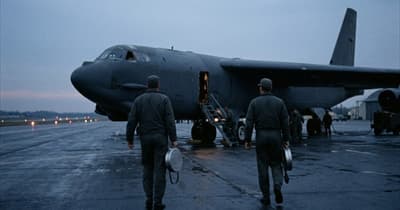
Gavin Trethewey got his moon mission only a couple of days before the landing. He was 29, an experienced Royal New Zealand Air Force pilot at Ohakea, and the job had nothing to do with leaving Earth. He and navigator Mike Hill were told to fly a Canberra bomber to Sydney, wait for a videotape, throw it into the aircraft, and get it to Wellington before the 7:30 news.[1]
New Zealand had no satellite earth station in 1969, so its broadcaster hired an air force bomber to rush Apollo 11 moonwalk footage from Sydney to Wellington. The tape landed about half an hour before airtime.[1]
In 1969, New Zealanders could hear the Moon landing on radio, but live television had to obey geography. The New Zealand Broadcasting Corporation normally received international news tapes through Sydney, then flew them across the Tasman on commercial services for broadcast the next day.[1] Apollo 11 made that routine feel suddenly ridiculous. A country could listen to history as it happened, then wait for the picture to arrive as cargo.
At Sydney Airport, Trethewey and Hill waited in a small operations room while the moonwalk reached Australian screens through a relay chain that was already under strain.[1] Armstrong had moved the walk earlier than planned. Parkes, Honeysuckle Creek, and Goldstone were all receiving the lunar television signal, with NASA choosing among the usable feeds as the pictures came in.[2]
At Parkes, bad weather pushed the dish near the edge of what anyone wanted to risk. Three stations received the signal, and the Australian feed ran through Sydney before part of it went on to Houston for the international broadcast.[3] At Honeysuckle Creek, technicians had built temporary television links to carry pictures out to Canberra, adapting whatever equipment they could get because permanent infrastructure was not there yet.[4]
The tape finally arrived from the ABC studios at Gore Hill. Trethewey later remembered the handoff in one plain sentence: "As soon as the tape arrived we threw it in the plane and took off."[1] Customs had been arranged in advance. Police were ready in Wellington. The jet left Sydney around 4:30 p.m. New Zealand time and touched down at Wellington at 7:00, with the broadcast due thirty minutes later.[1]
A 40-minute videotape made the evening bulletin, and the object is still wonderfully out of scale with the event it carried. Apollo 11 belonged to dishes, mission control loops, and a spacecraft more than 200,000 miles away. For New Zealand viewers that night, it also belonged to a metal canister in a pilot's hands, a bomber on a television errand, and a police car racing toward the studio with the Moon in the back seat.[1]