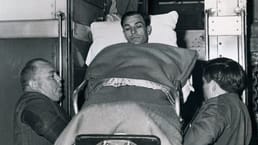
Romain Grosjean raised both hands toward a camera, and the hands did most of the talking. They were wrapped in white bandages after his Haas had gone into a barrier in Bahrain, split apart, and burned. From the hospital bed, he admitted something odd for a racing driver to say about a piece of safety hardware. Years earlier, he had been against the halo. Now he called it the greatest thing Formula 1 had brought in, because without it he said he would not have been able to speak at all.[2]
Formula 1's halo is the curved cockpit safety bar that many fans and drivers mocked when it arrived in 2018. It looked awkward on open-wheel cars, but crash after crash has turned it into one of the sport's most publicly thanked inventions.
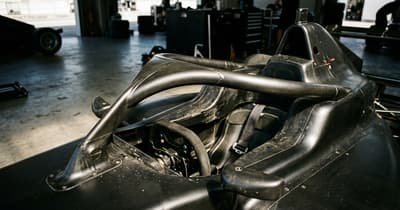
Three seasons before Grosjean's fire, the halo arrived with a looks problem. Formula 1 had built its romance around exposed cockpits, visible helmets, and the idea that a driver sat alone in the open air. The new device put a wishbone-shaped bar over the driver's head. Formula 1 later wrote that it met "considerable opposition" because of its look and because it moved the sport away from the fully open cockpit that had long been part of single-seater racing.[1]
In the crash tests, the awkward bar had to behave like a stubborn piece of architecture. Formula 1 described a vertical downward load of 116 kilonewtons, another rearward load, and a separate lateral test pushed into the structure. Mercedes technical director James Allison summarized the requirement in plainer language: the chassis had to be strong enough to take roughly the weight of a London double-decker bus sitting on top of the halo.[1]
On the first lap in Bahrain in 2020, Grosjean touched Daniil Kvyat's car, speared into the barrier after Turn 3, and hit at a speed Haas measured at 221 kph before the data logger stopped. His car burst into flames. He climbed out with burns on his hands, but X-rays found no fractures. The detail that stayed with people was the driver, still singed by the accident, changing his mind out loud.[2]
At Monza in 2021, Lewis Hamilton had his own blunt sentence for it. Max Verstappen's Red Bull vaulted over Hamilton's Mercedes, and the tire crossed the cockpit area. Afterward Hamilton said, "Thank god for the halo." He credited it with saving him, and specifically with saving his neck.[3]
After Bahrain and Monza, old complaints about the halo's profile sounded smaller. Fans had judged it in photographs, where it interrupted the car's line. Drivers met it in the one place where beauty could not help them: under another car, in fire, or behind a wheel that had become a projectile.
In an empty garage, the halo still looks ungainly. It sits over the cockpit like a handle someone added after the designer had gone home. That may be the right shape for this story. The bar does not complete the silhouette. It waits for the second when the sport's romance runs out of room, and ugly has to hold.