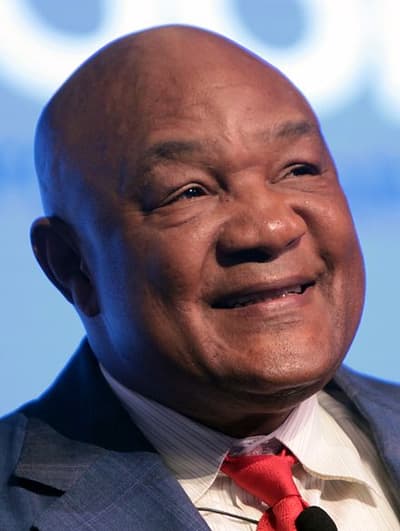
George Foreman made his name by hitting people hard enough to change their lives.
He won Olympic gold. He flattened Joe Frazier. He lost to Muhammad Ali in one of the most famous fights ever staged. Then, improbably, he came back in middle age and regained the heavyweight championship at 45, becoming the oldest world heavyweight champion in history.[1]
That should have been the financial peak. That is how these stories are supposed to work. You endure the punishment, collect the belts, cash the purses, and spend the rest of your life explaining what it felt like under the lights.
Except George Foreman’s biggest payday did not come from a ring. It came from a grill.
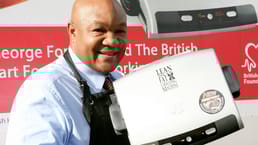
Not a title fight. Not pay-per-view. Not the comeback. The real fortune came later, in kitchens, through retail shelves and television ads, attached to a slanted little machine designed to drain fat from hamburgers. Foreman ultimately made far more money from the George Foreman Grill than he ever did from boxing. At the height of its success, he was reportedly earning $4.5 million a month in payouts. Then, in 1999, Salton paid him $137.5 million, usually rounded to $138 million, for the full rights to use his name.[1]
It is one of the great modern celebrity twists: a heavyweight champion out-earned by a countertop appliance with his own smile on the box.
The First Life Was Already Enough For Legend
Foreman did not come to the grill business as a washed-up athlete clinging to endorsement money. He came to it as George Foreman, which already meant something enormous. After a troubled youth, he found boxing, won a gold medal in the heavyweight division at the 1968 Summer Olympics, and turned professional the next year.[1]
He rose fast. In 1973, he took the world heavyweight title by destroying the previously unbeaten Joe Frazier in two rounds, dropping him again and again in one of the sport’s most savage championship performances.[1] Foreman was not merely successful. He was terrifying.
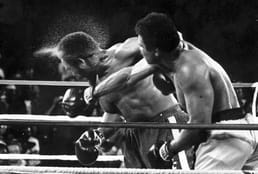
Then came Ali in Zaire in 1974, the “Rumble in the Jungle,” and with it one of boxing’s most famous reversals. Foreman lost. Later he stepped away from the sport after a religious experience, became an ordained minister, and seemed to be entering a completely different life.[1]
But George Foreman was unusually good at second acts. He returned to boxing, older, heavier, friendlier, less menacing in demeanor and somehow even more compelling. In 1994, he knocked out Michael Moorer and reclaimed the heavyweight title at age 45.[1]
For most athletes, that would have been the impossible ending. For Foreman, it was just the part people remember before the grill.
The Appliance That Understood Television
The George Foreman Grill did not succeed because it was glamorous. It succeeded because it was the opposite. It was practical, simple, and easy to explain in one sentence. It cooked food fast. It let grease run off. It fit neatly into the language of 1990s consumer culture, where convenience, dieting, and direct-response television were converging in one giant marketplace.[1]
The official name, the “Lean Mean Fat-Reducing Grilling Machine,” sounded like something invented in an advertising brainstorm and then never improved because it was already ridiculous enough to work.[1] But what made it stick was not just the product. It was Foreman himself.
He was an unusually effective pitchman because he did not feel like a pitchman. He felt like George Foreman, still huge, still famous, but now avuncular, warm, faintly amused by his own existence. He could sell toughness and gentleness at the same time. The man who once bullied heavyweight champions now wanted to help you make a burger in your kitchen with less mess.
That contrast was commercial gold. Plenty of celebrities endorse products. Very few fuse with them so completely that the product becomes inseparable from the person. This one did. It was not just a grill. It was the George Foreman Grill.
Then The Numbers Became Absurd
The grill sold in staggering quantities, eventually reaching tens of millions of units worldwide.[1] That matters because products obey a different economic logic than sports careers. A boxer gets paid in bursts. A product gets paid every time someone decides dinner should be easier.
At peak sales, Foreman was reportedly earning $4.5 million a month from the grill.[1] A month. Not from getting punched. Not from training camp. Not from defending a title. From licensing his name to a machine sitting next to people’s toasters.
This is where the story stops sounding like a clever endorsement deal and starts sounding like a prank on our assumptions. Boxing is supposed to be the glamorous money. It is dangerous, scarce, televised, mythic. Grills are humble. They live under cabinets.
But the grill had one advantage boxing never could. It scaled. Foreman could only fight so many times. The grill could sell every day, in every state, to people who had never watched him fight and barely knew what a jab was. His boxing fame built the bridge. Consumer trust turned that bridge into a highway.
Then, in 1999, came the buyout. Salton paid Foreman and his partners $137.5 million for the full rights to use his name, a figure usually cited as $138 million.[1] That was the exclamation point. The grill was no longer a side business. It was one of the most lucrative celebrity licensing deals ever attached to an athlete.
Why The Grill Beat The Gloves
The easy answer is volume. One man can only box so often. A successful consumer product can sell millions upon millions of times. But there is a deeper answer too.
Boxing made George Foreman famous. The grill made him familiar.
Sports fame is episodic. It comes in bouts, seasons, eras. It belongs most intensely to fans and to memory. Product fame is domestic. It enters kitchens. It becomes wedding-gift material. It sits in dorm rooms and suburban cupboards. It turns a celebrity into part of household routine.
That is what happened here. Foreman’s ring career made him larger than life. The grill made him familiar enough to live with.
And there was something perfect about the timing. The older Foreman, the smiling one, the redeemed one, was much easier to invite into a kitchen than the younger destroyer who had once stalked heavyweights. The second George Foreman turned out to be not just more lovable, but more marketable.
The Better Second Act
What makes the story linger is not simply the amount of money, though the amount is absurd enough. It is the shape of the reversal. Most athletes spend their post-career years trying to convert old glory into smaller, safer checks. Foreman managed something much stranger. He converted old glory into a fortune that dwarfed the sport itself.
He had already pulled off one impossible reinvention by returning to boxing and winning the heavyweight title in his 40s.[1] Then he topped it with another, becoming a retail phenomenon whose biggest commercial legacy had nothing to do with hooks, uppercuts, or footwork.
That is why the story works so well. It takes the expected hierarchy of prestige and flips it over. The Olympic medal, the championship belts, the knockouts, the Ali fight, the comeback, all of it was eventually out-earned by a fat-draining grill.
And maybe that is the most modern part of the whole thing. Athletic greatness built the name. Television made the man legible. Retail did the rest. Somewhere in that chain, George Foreman stopped being merely a boxer who endorsed a product and became something rarer: a celebrity whose second life turned out to be more profitable, and in some ways more culturally permanent, than the first.