Before the secretaries arrived at Manhattan's Citicorp Center, laborers had a night's worth of welding debris to clear away. Crews had opened office walls, enclosed the exposed steel in plywood, and worked until four in the morning. Now the building had to receive the people who spent their days inside it.[2]
In 1978, crews reinforced Citicorp Center at night after its engineer calculated that strong winds could threaten the tower. The offices stayed open, while the full reasons for the emergency work remained largely hidden from the public until 1995.[1]
At the bank's request, construction manager Arthur Nusbaum considered welding around the clock and refused. Smoke could set off the alarms and panic tenants. His schedule gave carpenters the building at five in the afternoon, welders at eight, and cleanup crews the hours before morning. People could keep coming to work while other people reinforced the structure around them.[2]
William LeMessurier had helped design a tower that seemed to hover above the street. Its four main outer columns stood at the middle of each side, leaving the corners unsupported from below. Huge diagonal braces carried loads toward those columns. During construction, his firm's New York office had approved replacing welded connections in the braces with bolted ones.[2]
When LeMessurier revisited the wind calculations in 1978, he became alarmed about winds striking the building diagonally. He concluded that the bolts could be dangerously overstressed. The rooftop device that reduced the tower's sway might help, but it needed electricity, a worrying dependency during a storm. Hurricane season was approaching.[1][2]
On an unoccupied floor, workmen tore away wallboard so engineers could compare a real connection with the drawings. LeMessurier proposed welding two-inch-thick steel plates over more than two hundred bolted joints. The contractor had the steel available. In a lavish office or an empty floor, the same job waited behind the wall.[2]
Citicorp's August press release acknowledged additional welding but assured readers there was no danger. Behind that reassurance, engineers arranged backup generators and continuous attention for the rooftop stabilizer. Emergency planners prepared to evacuate the tower and surrounding neighborhood if threatening winds arrived. The people drawing up evacuation plans knew considerably more about the work than the people who might have to leave.[2]
As Hurricane Ella approached in early September, the most critical connections had already been strengthened. The storm turned out to sea. Welding continued into October, and the building stayed standing. The extensive account of the crisis appeared in The New Yorker seventeen years later.[1][2]
In 2019, researchers using modern analysis on a similar building found that diagonal winds were less demanding than winds striking a face directly. They called for reexamining the Citicorp design and retrofit history. They had studied a similar structure, so this did not establish that the original tower was safe. It left room to question just how close the city had come to the catastrophe the repair teams feared.[3]
Back in 1978, LeMessurier kept recalculating which connection the welders should tackle next as each repair reduced the danger he estimated. Nusbaum's crews followed that order through the building, seven nights a week. Then came the cleanup, and another office day, with a little more steel hidden behind the walls.[2]
Sources
- CNN: The crisis at Citicorp Center
- Joseph Morgenstern, The Fifty-Nine-Story Crisis
- Park and colleagues: Wind Effects on a Tall Building with Square Cross Section and Mid-Side Base Columns
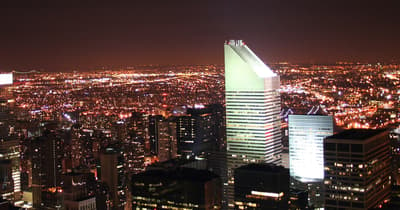
Photo: Amar Raavi (Amar.raavi), CitigroupCenterNight, via Wikimedia Commons, CC BY-SA 3.0. Cropped, resized, and lightly sharpened; adapted photograph licensed CC BY-SA 3.0. Contextual photograph uploaded in 2007, not an image of the 1978 repairs.