On a Sunday morning in February 1932, two American aircraft carriers moved toward Hawaii in bad weather, while the ships they were meant to surprise sat in Pearl Harbor. Rear Admiral Harry E. Yarnell had not brought his battle line forward for the expected naval duel. He had brought airplanes.[3]
In Fleet Problem XIII, Harry E. Yarnell showed that Pearl Harbor could be hit by a surprise carrier air attack from the north, years before Japan used a strikingly similar approach on December 7, 1941.
The date was February 7, 1932, and the target was not theoretical on a map. The U.S. Navy war game sent Yarnell against Pearl Harbor in a scenario involving a possible conflict with a “militaristic, Asian, island nation.” He commanded 152 aircraft from two carriers, USS Lexington and USS Saratoga.[2]
Most defenders expected the old pattern, battleships and cruisers closing for the kind of surface fight admirals had been trained to imagine. Yarnell left his cruisers near San Diego in radio silence and moved the carriers toward Hawaii with a small destroyer escort.[3] The maneuver was not just clever game play. It was a test of whether carrier aircraft could reach a fleet anchorage before the anchorage could defend itself.
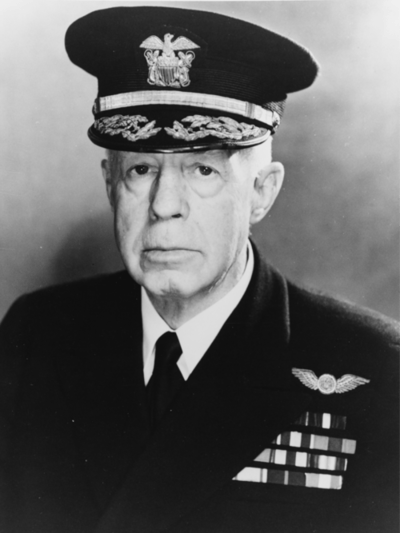
Yarnell was a strange man to dismiss on that question. He had spent decades in the Navy, had commanded the USS Saratoga, and was a qualified naval aviator at a time when many officers still treated carriers as scouts rather than decisive weapons.[1][5] In a Navy still built emotionally around the battleship, he understood what airplanes could do to ships that were sitting still.
His planes came in from the north-northeast, a direction later echoed by Japanese carrier aircraft in 1941.[2] He chose Sunday morning, when Pearl Harbor’s routine made surprise easier. The aircraft struck the airfields first, aiming to keep defending planes from getting into the air, then turned to the vessels in the harbor.[2]
The umpires initially judged Yarnell the winner. In the logic of the exercise, Pearl Harbor had been caught unready by a carrier air attack.[2] The result made a blunt point. A protected harbor full of battleships could look secure from the pier and still be vulnerable from above.
A rehearsal nobody wanted to believe
American planners had been thinking about Japan for decades. War Plan Orange, developed for a possible Pacific conflict, reflected the long-standing fear that the United States might one day fight Japan across a vast ocean.[2][5] Fleet Problem XIII did not invent that anxiety. It gave it wings, flight paths, targets, and a Sunday morning clock.
The Navy did not take the lesson as far as Yarnell thought it should. Later accounts of his career describe his warning about Pearl Harbor’s vulnerability as dismissed by superiors.[1] PearlHarbor.org notes that although Yarnell was first treated as the winner, the War Department later changed its ruling.[2] The uncomfortable implication was easier to argue with than to absorb.
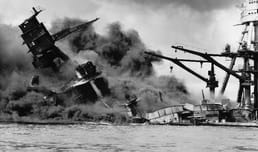
Nearly ten years later, Japanese carrier aircraft attacked Pearl Harbor on a Sunday morning. They struck airfields and ships, and the American battle fleet suffered the kind of blow Yarnell’s exercise had imagined in miniature.[2] The real attack was larger, deadlier, and carried out with weapons and planning beyond the 1932 drill. Still, the outline was familiar enough to make the earlier exercise feel less like trivia than a warning left in plain sight.
Yarnell lived long enough to see the carrier become central to the Pacific war. The lesson he staged off Hawaii was no longer a staff-table argument. It had become a physical image: aircraft arriving over a quiet harbor, and battleships learning too late that the danger had not been on the horizon.
Sources
- Harry E. Yarnell, Wikipedia
- February 1932: The Other “Attack on Pearl Harbor”, PearlHarbor.org
- This American admiral planned the attack on Pearl Harbor in 1932, We Are The Mighty
- The First Attack: Pearl Harbor, February 7, 1932, Military.com
- How the United States Predicted the Attack on Pearl Harbor in 1932, Navy Together We Served