The judges at Olympia had a problem most referees never face. The man in the chariot was the emperor of Rome. The team was not the usual four horses, but ten. Then Nero fell out, was helped back in, could not finish the course, and still left with the winner's crown.[1]
In 67 CE, Roman emperor Nero entered Olympic contests, drove a ten horse chariot at Olympia, crashed, quit before the race ended, and was still declared the victor. The episode shows how quickly a contest can become a command performance when the contestant also owns the room.
In 67 CE, Olympedia says, Nero was awarded seven crowns at Olympia. He wanted to become a periodonikes, a winner at the four major Greek festivals, and wanted the cycle arranged so he could do it all in one year. The Olympic Games normally due in 65 CE were postponed to 67 CE, which let him tour Greece and gather victories in one imperial season.[1]
Suetonius describes theater doors that stayed closed while Nero sang. Some listeners, he says, climbed over walls or pretended to be dead so they could be carried out. The emperor fretted over judges, flattered them, suspected their silence, and treated public competitions like a courtroom in which everyone knew the safest verdict.[2]
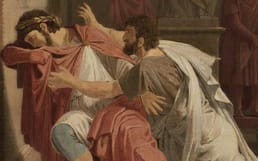
The ten horses crossed onto the Olympic track as part of Nero's own crown collecting tour. Suetonius says the emperor drove the team, an extravagance he had once mocked in another ruler. After the crash, he was placed back in the car, failed to last to the end, and received the crown anyway. On leaving Greece, he gave the province freedom and gave the judges Roman citizenship and money.[2]
The stadium had already accepted a moved calendar, added contests, soothed judges, and spectators trapped in their seats. By the time the chariot wheels came loose, the finish line mattered less than the question nobody in the stadium could safely ask out loud: what does winning mean when the loser is emperor?
World History Encyclopedia places the Greek tour beside Nero's theatrical ambition, cruelty, vanity, and hunger to be adored as an artist as well as obeyed as emperor.[3] The Olympic story catches those traits in miniature because sport carries a promise simple enough for a child to understand. You race. You finish. Then someone wins.
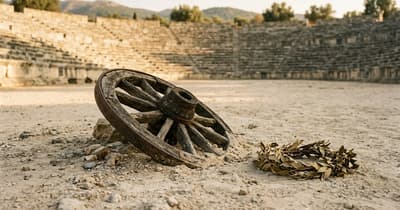
Nero returned to Rome with his crowns carried before him and staged his homecoming like a triumph.[2] The race itself leaves a stranger picture: an empty track, a broken chariot rhythm, judges still standing at their posts, and a laurel wreath waiting for the man who had already stopped driving.