There are journalists who report from comfortable capitals, and then there are journalists who get on a train and keep going until the map itself starts to feel dangerous.
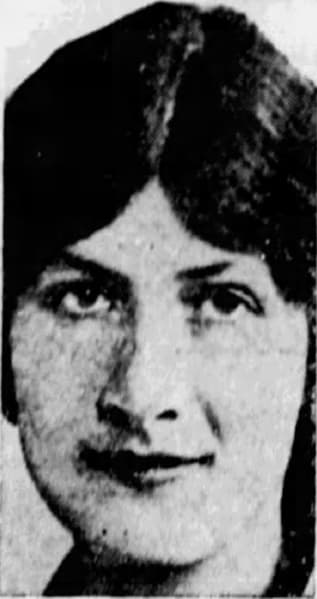
Rhea Clyman was the second kind.
She was a Jewish Canadian reporter, born in Poland in 1904 and brought to Toronto as a small child after her family emigrated there.[1] She lost part of her leg after being struck by a streetcar when she was young. After her father died, she left school early and worked in a factory to help support her family.[1] None of that sounds like the usual prelude to becoming one of the sharpest foreign correspondents covering the Soviet Union and, later, Nazi Germany. But that was the pattern of her life. She kept turning hardship into momentum.
By the time Europe was convulsing under dictatorships, Clyman had already built a career the hard way. She worked in New York, moved to London, served as a researcher for New York Times reporter Walter Duranty, and then became a foreign correspondent for the London Daily Express.[1] In 1928, she went to the Soviet Union.[1] That was where things became dangerous.
The Reporter Who Went Where She Was Not Supposed To Go
The Soviet Union of the late 1920s and early 1930s was a place that generated official stories faster than it tolerated honest ones. It promised industrial triumph, socialist transformation, and a new human future. It also contained prison labour, terror, scarcity, censorship, and famine.[1] Most of that was easier to deny from a Moscow office than from a rail carriage heading east.
Clyman traveled.
She moved through the USSR not as a stenographer for state myth but as a reporter looking for the part of the story people were trying to hide. She reported on conditions in Siberia and on the labour camp system there.[1] Then she turned her attention to Soviet Ukraine at the moment one of the twentieth century’s great atrocities was unfolding.
That mattered because the Holodomor was not merely a famine. It was also a contest over visibility. Millions were suffering, but suffering is easier for a regime to survive than testimony. The state could control borders, food, police, and newspapers. What it could not fully control was a stubborn outsider willing to keep writing down what she saw.
What She Saw In Ukraine
Clyman traveled in Soviet Ukraine and reported on famine conditions that much of the world either did not yet understand or preferred not to confront.[1] This put her at odds with the official Soviet narrative, which treated reports of mass hunger as lies, exaggerations, or hostile propaganda.[1]
That is one of the striking things about her career. She was doing this at a moment when denial was not fringe behavior. Denial was fashionable. Powerful. Socially useful. There were foreign correspondents who helped blur what was happening. There were governments that looked away. There were readers who preferred cleaner stories.
Clyman kept filing anyway.
And the cost of that honesty arrived quickly. Her reporting made her intolerable to Soviet authorities. In 1932, after covering the famine and broader Soviet conditions, she was expelled from the USSR.[1] The regime reportedly described her as too critical, which is a polite way for an authoritarian state to say that reality had become inconvenient.
The Pattern Repeats In Germany
You might think deportation from one dictatorship would be enough to convince someone to choose safer assignments. Clyman instead moved on to another gathering nightmare.
After leaving the Soviet Union, she reported from Nazi Germany.[1] This was not an accidental continuation of her career. It was almost a grim professional logic. She had already shown a willingness to work inside systems built on intimidation and deceit. Germany in the 1930s offered a new version of the same test, only with a different flag and a different mythology.
And here, too, she had no protective illusion available to her. She was Jewish. She was a woman. She was a foreign correspondent. She was exactly the kind of observer a regime built on racial paranoia and political theater would eventually find intolerable.
She continued reporting there until 1938, when growing antisemitism forced her to flee.[1] That detail lands with particular force. Clyman was not merely describing the machinery of persecution from a safe distance. She was reporting from inside its atmosphere until it became clear that the atmosphere itself had turned against her.
The Journalists History Nearly Loses
Rhea Clyman died in 1981.[1] For a long time, she was less famous than some of the men around her, including some whose reputations were burnished by access, prestige, or institutional backing. That is often how history first sorts journalists. The well-positioned become authoritative. The difficult ones become footnotes.
But difficult reporters have a way of aging well.
Clyman’s life now reads like a rebuke to the idea that the important witnesses are always the most celebrated in their own time. She was an immigrant child from a poor family, a disabled woman, a factory worker turned reporter, and a Jewish foreign correspondent who kept moving toward places where governments were trying to bury the truth.[1] She reported on the Holodomor. She reported on Siberian labour camps. She reported from Nazi Germany until antisemitism made staying impossible.[1]
That is not just a résumé. It is a pattern of moral direction.
A Career Built On Refusing Convenient Lies
What makes Clyman memorable is not simply courage, though she had plenty of it. It is the kind of courage she practiced. Not theatrical bravery. Not the bravery of slogans. The quieter kind. Boarding the train. Asking the next question. Writing the thing you already know will make powerful people angry.
Some journalists become important because they are close to power. Rhea Clyman became important because she kept walking away from it, toward the people paying the price for it.
And that is why she still matters. Dictatorships depend on force, yes, but they also depend on confusion, on fashionable doubt, on people deciding that certainty is impossible and evidence is negotiable. Reporters like Clyman disrupt that arrangement. They make denial harder. They leave a record behind.
Sometimes that is all history gets in time. One stubborn witness willing to see clearly before the rest of the world was ready to.