In Martin Juergens' telling, the family estate is not a field outside a village or a house with a roof that leaks. It is the Moon. The German claimant says Frederick the Great gave it to one of his ancestors in 1756 as a symbolic thank-you for services rendered, with the inheritance to pass through the youngest-born son.[1]
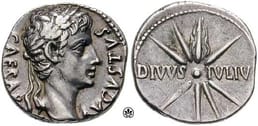
Martin Juergens, a German claimant, says the Moon has belonged to his family since 1756, when Frederick the Great symbolically granted it to his ancestor and ordered it to pass through the youngest-born son.[1]
The claim sits among a peculiar human habit: making ownership papers for places no one can occupy in the ordinary way. The Moon, visible to anyone with a clear sky, has drawn repeated private claims, though most claims to extraterrestrial real estate have not been recognized by any authority and have no legal standing.[1]
Juergens' version has the flavor of an old inheritance dispute rather than a souvenir business. It is framed as a royal gesture, a family line, and a rule of succession. The unusual part is not only the object being inherited. It is the seriousness of the form: a king, an ancestor, a youngest son, and the bright disk that rises over everybody else's roof.
The Moon Attracts Paperwork
Other claimants reached for the same impossible prize with more modern tools. In 1953, Chilean lawyer Jenaro Gajardo Vera became known for claiming ownership of the Moon.[1] On June 15, 1936, A. Dean Lindsay claimed all extraterrestrial objects, sent a deed and money to a Pittsburgh notary public, and later received offers from members of the public who wanted to buy objects from him.[1]
Lindsay had already made claims on the Atlantic and Pacific Oceans, which gives the episode the feeling of a mapmaker running out of map.[1] A normal deed points to a boundary, a parcel, a tax record, maybe a neighbor who disputes the fence. A lunar deed points upward. The language is familiar. The destination is not.
Modern space law was written to keep that language from becoming a scramble for territory. The 1967 Outer Space Treaty describes outer space as the "province of all mankind" and forbids nations from claiming territorial sovereignty there.[1] Royal Museums Greenwich puts the practical problem plainly: anyone can enjoy looking at the Moon, but buying a plot of it is not what it may appear to be.[2]
Why a Flag Is Not a Title Deed
The treaty came out of the Space Race and was signed in 1967 by the United States, the United Kingdom, and the Soviet Union.[3] Its rules apply to space and to celestial bodies including the Moon, and they say exploration and use should be carried out for the benefit and interests of all countries.[3] They also say outer space is not subject to national appropriation.[3]
That leaves little room for the popular loophole: if a country cannot own the Moon, perhaps a person can. Space law experts cited in discussions of lunar ownership argue that citizens and corporations cannot claim outer space when nation-states themselves are barred from doing so.[3] For most individual claims, the practical result is the same: little legal weight and no recognized authority behind them.[1]
Still, the claims endure because they are more than legal arguments. They are portable stories. A lawyer in Chile. A man writing to a notary in Pittsburgh. A German heir invoking Frederick the Great. Each one shrinks the unreachable Moon into something human-sized: a document, a family line, a signature, an offer to buy.
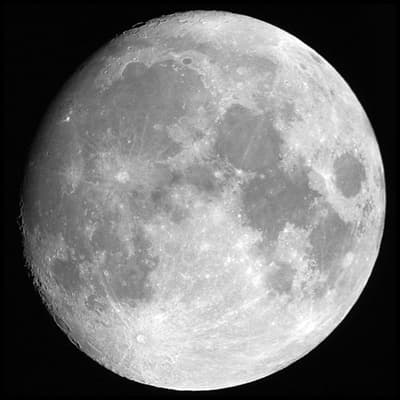
On a clear night, the Moon does not look privately held. It rises without a fence, without a posted notice, without a youngest son standing guard below. Yet in the odd record of extraterrestrial real estate, it also carries a paper trail: a royal gift in Juergens' family story, and an inheritance too large to fit on any earthly deed.