On July 18, 1945, Otto Frank learned that Margot and Anne were dead. He had already survived Auschwitz and returned to Amsterdam without his wife. Now survivors from Bergen-Belsen brought the news that his daughters had died of typhus months earlier. Afterward, Miep Gies gave him the notebooks and loose papers she and Bep Voskuijl had saved from the hiding place.[1][3]
Anne Frank’s diary was widely expected to enter the public domain in parts of Europe on January 1, 2016, 70 years after her death. In 2015, the Anne Frank Fonds argued that Otto Frank’s editorial work on the published book gave him co-author status, a claim that could extend copyright on key editions.
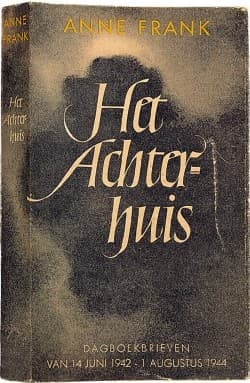
The papers Otto received were not a finished book. Anne had kept an original diary, often called the A version, and later began rewriting it, the B version, after hearing a radio appeal for wartime diaries and documents to be preserved.[2] The A version was incomplete. The B version ended before August 1, 1944. When Otto prepared the 1947 Dutch edition, Het Achterhuis, he compiled passages from both versions.[2]
That act of compilation became the center of a legal fight seven decades later. Under the basic European copyright rule, protection generally lasts until 70 years after the author’s death. Anne Frank died in 1945, so readers, scholars, and publishers expected at least some diary writings to lose copyright protection in parts of Europe on January 1, 2016.[1][4]
The uncomfortable part was the name attached to the claim. The Anne Frank Fonds, the Basel foundation connected to the diary rights, treated Otto as more than an editor of the widely read published version. Contemporary reports said the Fonds argued that Otto’s selecting, combining, and shaping of Anne’s two versions made him a co-author of the book. Because Otto died in 1980, that argument could push protection much farther into the future.[3]
The Anne Frank House in Amsterdam answered in plain terms. Otto Frank, it said, was not the co-author of Anne’s original diary writings. Anne was the sole author of the A and B diary versions and the short stories. Otto had made editorial decisions, but the entries remained Anne’s diary entries and stories.[2][4]
A Diary, An Edition, A Legal Boundary
The distinction mattered because the book most people know was assembled after Anne’s death. Later editions added material that had been left out. In 1986, a critical edition published by the Netherlands State Institute for War Documentation, now NIOD, included fuller diary material.[1][4]
That history made the legal map uneven. The Anne Frank House noted in late 2015 that copyright expiration differed from country to country. In the Netherlands, transitional measures tied to the European copyright directive meant some sections, especially parts first published in the 1986 critical edition, could remain protected longer than the basic 70-year rule suggested.[4]
So there was no single clean midnight when the diary simply became public property across Europe. A passage could be treated one way in one country and another way elsewhere. A manuscript, a published edition, a translation, and a later critical edition could each sit under different claims.[4]
The strange human fact is that the dispute turned on the work of a father who had not written the diary at all. Otto Frank survived, received the saved papers, and made a book from versions his daughter had left behind. Seventy years later, that same act of preservation became a copyright argument, with Anne’s pages still at the center, fragile papers first gathered from the floor of a hiding place.[1][2][3]