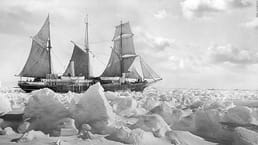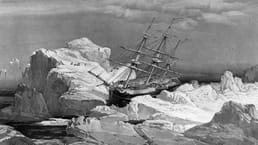
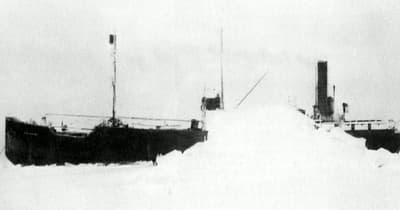
In 1931, the crew of the Baychimo stepped off their ship and assumed the Arctic had finished the job for them. The 1,322 ton cargo steamer had been trapped in pack ice off northern Alaska, battered by weather, and left behind after a blizzard erased it from sight.[1]
Then the ship came back.
For nearly four decades, people kept spotting the same unmanned vessel in the ice, a rusting steel hulk with no captain, no engines running, and no obvious reason to still be afloat. The last recorded sighting came in 1969, 38 years after the Hudson's Bay Company abandoned it as a lost cause.[2]
The Baychimo began as a practical ship, not a legend. Built in Sweden in 1914 and first named Angermanelfven, it became British property after World War I and was purchased by the Hudson's Bay Company in 1921. Renamed Baychimo, it carried supplies and traded for furs along Arctic routes that punished even sturdy ships.[1]
By 1931, the vessel was working the northern Alaska coast when ice trapped it near Wainwright and Utqiagvik, formerly Barrow. Aircraft evacuated most of the crew in October, while a smaller group stayed nearby in a makeshift shelter, hoping to recover cargo if the ship survived the winter.[3] On November 24, a blizzard hit. When the storm cleared, the Baychimo was gone, and the crew assumed it had sunk.
It had not. Trappers reportedly saw it weeks later. In 1932, Inupiat men boarded it before a storm pushed it away again. In 1933, people from the vessel Trader found it locked in ice near Wainwright and recovered objects that eventually reached the University of Alaska Museum of the North.[4]
That museum connection gives the ghost story a surprisingly tangible afterlife. A label reading "Taken from the Beychimo" led researchers to link an ulu, a copper knife, and other Inuit objects to the abandoned ship's cargo and salvage history.[4] The Arctic ghost ship was not just a sailor's tale. Pieces of its strange journey ended up in drawers.
The unsettling part is how ordinary the ship was. It was not magic, just well built, steel hulled, and repeatedly carried by ice instead of crushed by it. The Scottish Maritime Museum notes that sightings continued around northern Alaska until 1969, and that the ship's final location remains unknown.[3]
The Baychimo matters because it turns shipwreck into a slower, stranger kind of disappearance. Most lost vessels vanish in a single disaster. This one kept refusing the ending. For 38 years, the Arctic did not sink the story. It moved it.