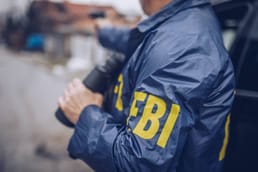
Mike McPheters once described a life built for Washington gossip: he worked as an FBI agent, then went home to serve his congregation as a Mormon bishop. The bishop’s role, he wrote, had come to him from another FBI agent.[1]
The FBI, CIA, and other U.S. security agencies have a long reported reputation for hiring a disproportionate number of Latter-day Saints, partly because many applicants bring mission language experience, orderly personal histories, and lifestyles viewed as easier to clear.
Inside intelligence and law-enforcement circles, the pattern has been visible enough to pick up a nickname, the “Mormon Mafia.” The phrase points less to a conspiracy than to a recognizable cluster of resumes, church ties, foreign missions, and clean background checks moving through agencies that prize predictability.[1]
For many Americans, that familiarity is the surprising part. In a 2012 Pew Research Center survey of more than 1,000 U.S. Mormons, 62 percent said Americans as a whole were uninformed about Mormonism.[2] Nearly half, 46 percent, said Mormons faced a lot of discrimination in the United States, and 68 percent said Americans did not see Mormonism as part of mainstream American society.[2]
At a federal hiring desk, though, a missionary past can look less exotic than useful. Many Latter-day Saints serve missions, often living away from home and learning another language. For agencies that need people who can work across borders, read cultural cues, and pass a security review, that experience can become more than a biographical detail.[1]
The clearance process also rewards a certain kind of ordinary life. Investigators look for debts, drug use, unstable employment, risky associations, and foreign entanglements that could make an applicant vulnerable or hard to vet. The Atlas Obscura account describes Latter-day Saints as attractive candidates partly because they are often perceived as having low-risk lifestyles, making some clearances cheaper and simpler to complete.[1]
That does not make every Mormon applicant a safe bet, or every non-Mormon applicant a difficult one. It means recruiters may notice when common life patterns line up with bureaucratic needs. Pew found that religious practice is central for many U.S. Mormons: more than two-thirds said religion was very important to them, that they prayed daily, and that they attended church weekly.[3]
The same survey captured the tension around that visibility. Mormons make up slightly less than 2 percent of the U.S. public, a small minority whose members often feel misunderstood, yet whose habits can appear unusually legible to some of the country’s most security-conscious employers.[2] In popular culture, that tension keeps resurfacing, from McPheters’s memoir Agent Bishop to a 2015 Quantico subplot about a Mormon recruit with an immaculate public image.[1]
The clearest picture is not a secret pipeline from chapel to headquarters. It is a narrower and stranger fit: missions that produce language experience, communities that leave long paper trails, and personal habits that can make a background file easier to read. In McPheters’s case, the image was almost too neat, an FBI badge in one pocket, and a bishop’s keys in the other.