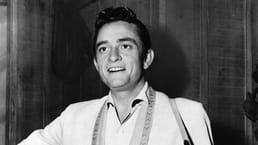
On August 18, 2017, Billboard published a statement from Rosanne Cash and her sisters Kathy, Cindy and Tara after video from the Unite the Right rally in Charlottesville, Virginia, showed a marcher wearing a Johnny Cash T-shirt [1][6]. The rally, held August 11 and 12, 2017, drew white nationalists, neo-Nazis and Klansmen, turned violent, and ended with a man driving a car into a crowd of counter-protesters, killing Heather Heyer [6]. Rosanne, born May 24, 1955, in Memphis, is Johnny Cash's eldest daughter [3].
In the post, the sisters wrote that their father "would be horrified at even a casual use of his name or image for an idea or a cause founded in persecution and hatred" [1][7]. They also recalled a line he repeated to them: "Children, you can choose love or hate. I choose love" [1][7]. Several men in the extended Cash family, they noted, had served in the military [1].
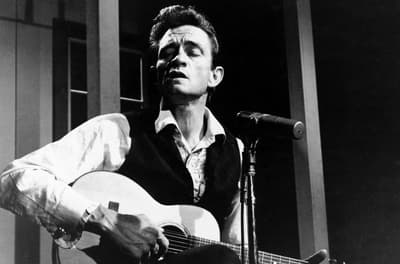
In 1964 Cash released Bitter Tears: Ballads of the American Indian, his twelfth album for Columbia Records, a concept record about the history of Native Americans and their treatment by European settlers [4]. Two of its songs dealt with twentieth-century issues facing the Seneca and Pima peoples [4]. Cash believed his own ancestry included Cherokee, which partly inspired the project [4].
"The Ballad of Ira Hayes" was written by folk singer Peter La Farge and recorded by Cash for the album [5]. Its lyrics describe the Pima people of the Gila River Community in Arizona, whose water rights were taken when white settlers arrived, then follow Hayes, a Pima Marine who helped raise the flag on Iwo Jima in World War II [5]. Hayes came home to hostility and died drunk in a ditch [5].
Seven weeks after a fast start on the Billboard country chart, the single had stalled in the mid-teens as radio stations, disc jockeys and fans turned away from it [4]. Cash answered by buying and mailing more than 1,000 copies of the record to radio stations across the country [4].
He also paid for a full-page advertisement in the August 22, 1964, issue of Billboard [4]. The ad called some disc jockeys and programmers "gutless" for refusing to play the Ira Hayes song and asked where their guts were [4][1]. By September 19, 1964, the single had reached number 3 on the Billboard country singles chart, and the album had risen to number 2 [4].
In 2011 Antonino D'Ambrosio published A Heartbeat and a Guitar: Johnny Cash and the Making of Bitter Tears, a book that drew new attention to the record [4]. A tribute album, Look Again to the Wind: Johnny Cash's Bitter Tears Revisited, followed in 2014 with Gillian Welch, David Rawlings, Emmylou Harris and Kris Kristofferson [4]. The documentary We're Still Here: Johnny Cash's Bitter Tears Revisited first aired on PBS on February 1, 2016 [4].
Cash died on September 12, 2003, having sold more than 90 million records and been inducted into the Country Music, Rock and Roll and Gospel Music Halls of Fame [2]. The 1964 advertisement remains the clearest record of his fight with the radio industry over the Ira Hayes single [1][4].