
A late 14th-century English cook was told to make a sheet of dough, cut it into pieces, and drop those pieces into boiling water. Then came the part that still feels familiar: grate the cheese, melt the butter, layer it all together, and “serue forth.”[4]
Macaroni and cheese has a medieval paper trail: a 14th-century English recipe called “makerouns” describes boiled pieces of dough layered with grated cheese and melted butter, closer to lasagna than today’s boxed mac and cheese but recognizably built from the same idea.
The words come from The Forme of Cury, a late 14th-century English cookery manuscript that includes a dish called “Makerouns.”[4] Its instructions are wonderfully compact: “Take and make a thynne foyle of dowh, and kerue it on pieces, and cast hym on boiling water & seeþ it wele. Take chese and grate it, and butter imelte, cast bynethen and abouven as losyns; and serue forth.”[4]
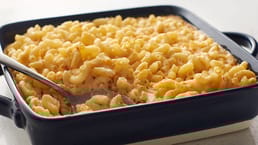
In modern English, the cook is being told to make a thin sheet of dough, cut it up, boil it well, then arrange it with grated cheese and melted butter in layers, “as losyns,” or like lasagna.[4] There is no elbow macaroni, no orange packet, no casserole dish with a browned crust. But the central move is already there: boiled dough, cheese, butter, and heat.
The Medieval Dish Was Layered, Not Saucy
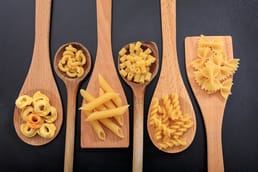
The old name is often rendered “makerouns” or “macrows,” and modern historical cooks sometimes describe it as medieval mac and cheese.[2] That shorthand works only if “macaroni” is allowed to be broad. In Italian usage, maccheroni could refer to several pasta forms, including flat strips of wheat pasta, not just the short curved tubes many Americans picture today.[2]
The recipe’s comparison to lasagna makes the shape clearer. The pasta began as a sheet, was cut into pieces, boiled, and stacked with cheese and butter.[4] One modern reconstruction calls for fresh or dried noodles, grated cheese, and melted butter, layered in a bowl or platter and served immediately, or briefly warmed in an oven.[4] Another adaptation leans into the lasagna connection with wide noodles, shredded cheeses, butter, and optional spices such as cinnamon, saffron, and long pepper.[5]
The English recipe was not the only early path. Food historians also point to the 14th-century Italian Liber de Coquina as an early recorded example of pasta layered with cheese.[2] The English “makerouns” looks less like an invention from nowhere than a local version of a larger medieval habit, fresh pasta meeting cheese and fat in layers.
How It Became More Familiar
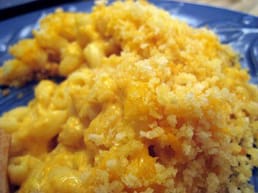
By 1769, Elizabeth Raffald’s The Experienced English Housekeeper offered a richer version: macaroni with cream, butter rolled in flour, and Parmesan toasted over the top.[1] That recipe sounds closer to the creamy baked dish many people would recognize, with sauce binding the pasta instead of simple layers of butter and grated cheese.
Nineteenth-century British cookbooks kept working the idea. Eliza Acton’s 1845 Modern Cookery in All Its Branches included “Macaroni a la Reine,” made with white cheese dissolved in cream and seasoned with salt, cayenne, mace, and butter.[1] Mrs. Beeton’s 1861 Book of Household Management also included macaroni served with the cheese course.[1]
In the United States, the dish picked up famous associations. Thomas Jefferson and his enslaved chef James Hemings encountered macaroni in Paris, and Jefferson later imported macaroni and Parmesan cheese to Monticello.[3] A macaroni pie was served at an 1802 state dinner, giving the dish another prominent American appearance.[3]
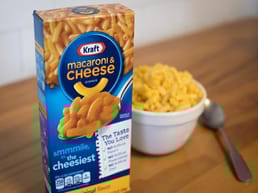
The boxed version arrived much later. During the Great Depression, Kraft introduced a cheap macaroni and cheese product made with pasta and powdered cheese, useful for families and soup kitchens trying to stretch food budgets.[3] During World War II, its portability and combination of carbohydrates and protein made it useful for soldiers as well.[3]
That long trail makes the medieval recipe feel less like a novelty and more like a small surviving gesture. The pasta shape changed. The cheese changed. The sauce appeared. But in the oldest English version, the cook is still there, dropping cut dough into boiling water and hiding butter between layers of grated cheese.