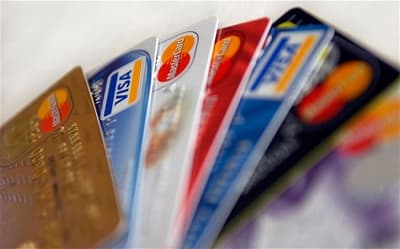
In 2008, Dmitry Argarkov received an unsolicited letter from Tinkoff Credit Systems offering him a credit card on terms he found unattractive [2]. Argarkov, a 42-year-old from the western Russian city of Voronezh, did not bin the envelope [1][3]. He scanned the agreement into his computer, rewrote the terms in his favour and posted it back to the lender [1][2].
The amended contract carried a 0 per cent interest rate, no fees and no credit limit [1][2][3]. Argarkov added a provision stating that the customer “is not obliged to pay any fees and charges imposed by bank tariffs” [1]. He also wrote in a penalty of 3 million rubles, roughly $91,000, payable to him every time the bank failed to stick to the rules [2]. He even changed an internet address in the document that pointed to the bank's own terms and conditions [1].
Tinkoff sent back a credit card and a copy of the approved application form [1]. The bank had confirmed its agreement to the client's terms, his lawyer Dmitry Mikhalevich told the newspaper Kommersant [1]. Mikhalevich said the credit line was unlimited, enough for his client to buy an island in Malaysia with the bank legally obliged to pay for it [1]. ProGenius later described a processing department that stamped the contract without reading it [4].
Argarkov used the card for about two years. In 2010 Tinkoff tried to terminate the account over late minimum payments and sued him for 45,000 rubles, then about £880 [1]. The claim bundled the remaining balance together with fees and late-payment charges that appeared nowhere in the version the bank had signed [1].
A Russian court ordered Argarkov to pay only the outstanding balance of 19,000 rubles, around £371 [1]. The judge was blunt about how the dispute had arisen: the bank had signed the documents without looking, then said what borrowers usually say in court, “We have not read it” [1]. The amended contract, not the original, governed the debt.
Argarkov countersued Tinkoff for 24 million rubles, about £470,000, over the bank's failure to honour the contract he had written [1]. British coverage of the counterclaim put the sum at £500,000 [3]. Tinkoff countersued him for alleged fraud. Founder Oleg Tinkov tweeted that his lawyers expected Argarkov to get four years in prison rather than 24 million rubles, and that the matter was now one of principle [1].
By August 2013 the case had travelled well beyond Voronezh. ProGenius, a business-story site, retold it as a lesson in information asymmetry, flagging the penalty clause worth about $90,000 [4]. A LinkedIn briefing from the same group called it a contract reversal that cost a major Russian bank hundreds of thousands of pounds [5]. Both accounts fix on the same decisive detail: the institution that drafted the fine print never read the version that came back [4][5].