Chuck Connors could give a paying visitor danger on schedule. Around the turn of the century, the man people called the Mayor of Chinatown led respectable customers through Doyers Street, then into an apartment where Georgie Yee and Blonde Lulu pretended to be ruined opium addicts for middle class strangers.[1][2]
Gilded Age slumming tours let rich New Yorkers buy a staged trip through Chinatown: fake opium dens, hired performers, arranged gang scares, and a bowl of chop suey packaged as an authentic glimpse of urban vice.
Connors lived at 6 Doyers Street, in the neighborhood he turned into his theater.[2] He had the accent, the costume, the nerve, and, most importantly, the audience. Visitors with money wanted the city to feel rough enough to talk about at dinner, but not rough enough to touch them. Connors solved the problem like a producer. The fear could be local, close, and carefully managed.
In 1884, The New York Times was already calling slumming a fashionable London mania that had reached New York.[3] Seth Koven's history of Victorian London traces the word to fashionable visitors who rode into East London in the 1880s to see poverty after dark.[4] New York gave the pastime its own map: Chinatown, Harlem, and Lower East Side tenements became places where outsiders could stare at poverty, race, sex, and danger as if the city had sold them a ticket.[3]
For a modest fee, Chinatown slummers might be shown shootings, kidnappings, opium dens, and dinner.[3] New York Almanack describes Connors taking clients to a Chinese theater, a temple, and finally an opium den where actors performed addiction while staged fights supplied knives, hatchets, and distant gunfire.[1] The visitors were not robbed. The fear came wrapped in a guarantee.
On the worst nights, authenticity became the product and the excuse. Tourists came looking for real misery, then accepted a counterfeit when the real neighborhood did not perform quickly enough. Some residents and guides, seeing the demand, sold back the caricature. The bargain was ugly, but clear. The customer wanted to feel brave without being endangered, charitable without being changed, knowledgeable without having to know anyone.
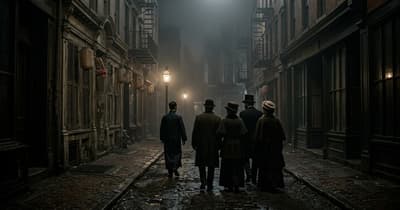
When the group stepped back into the night, it carried a story home. Maybe someone had seen a pipe, a woman on a couch, a fight that broke out exactly when it was supposed to. The paid secret was not that Chinatown had fooled the tourists. The secret was that the tourists had paid to have their own suspicion handed back to them, lit by a gas lamp, with the apartment door closing behind it.