Steven Lisberger spent seven months helping invent a new way to put a movie on screen, then watched the old movie world treat the invention like a suspicious shortcut. Years later, when he explained why Tron had not been nominated for a special effects Oscar, he gave the answer with a scoff: "The Academy thought we cheated by using computers."[1]
Disney's 1982 film Tron was passed over for a visual effects Oscar nomination even though it pioneered long computer generated sequences. Director Steven Lisberger said the Academy considered the use of computers a kind of cheating.
In 1982, the machine still looked like an intruder on a movie set. The modern blockbuster often begins inside a computer, but Tron arrived when many viewers knew computers as office machinery, military equipment, or arcade cabinets. The Guardian later described the film as the first to use long stretches of fully computer generated imagery, about 15 minutes in all.[2]
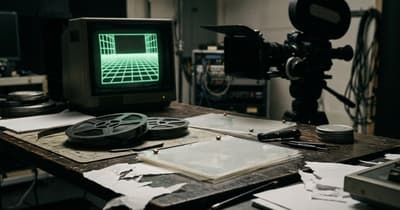
On the effects side, crews planned camera angles and movements, fed numbers into computers by hand, and waited for images to be generated. They saw the result only after it had been printed to 35mm film and projected. Even the glowing circuitry on the actors' costumes required old fashioned labor: the Guardian counted 75,000 frames whose lit areas had to be hand painted.[2]
On July 9, 1982, Disney released a film its archive now calls the first motion picture to make extensive use of computer imagery to create a three dimensional world. Tron received Academy Award nominations for sound and costume design, but not for visual effects.[3] Hollywood could recognize the costumes around the new world and the sound inside it, while hesitating over the new way the world itself had been made.
When Variety revisited the film 35 years later, Lisberger remembered a town frightened by computers and by the idea that they might enter moviemaking. Effects supervisor Harrison Ellenshaw, who had sat on the Academy committee process, said members did not understand the work, were not comfortable with it, and begrudged how unusual it looked.[4]
For Academy voters raised on visible shop work, a matte painting or a miniature offered familiar evidence of hands at work. A computer frame that took hours to render could still look, to a suspicious craft culture, as if the artist had stepped away and let a box do the dreaming.
In today's studios, that old suspicion returns whenever a new tool changes where the work can be seen. We still argue about which tools count as skill and which ones count as fraud. Tron sits near the beginning of that modern fight, glowing awkwardly in its black suits and handmade light. The supposedly cheating machine needed people everywhere: typing coordinates, painting frames, filming screens, and waiting for images to come back from the dark.
In the finished image, the computer world looked clean, geometric, and almost weightless. Behind it were people making marks one frame at a time. The lost nomination preserves the moment when a whole industry looked at its future and mistook the fingerprints for a trick.