On the Thursday before Easter in 1817, a strangely dressed young woman came into Almondsbury, a village eight miles north of Bristol, with little more than soap and a few coins. She knocked on doors, spoke in a language nobody recognized, pointed to herself, and repeated the name “Caraboo.”[1]
Princess Caraboo was Mary Willcocks, a cobbler’s daughter from Devon who persuaded people near Bristol that she was foreign royalty from “Javasu,” kidnapped by pirates and cast onto the English coast after escaping into the sea.
A village cobbler brought the stranger to the local authorities, where the question was first treated as a parish problem. Was she a beggar, a vagrant, a lost foreigner, or someone dangerous? She was taken to Mr. Hill, described as Overseer of the Poor, then to the town clerk, Samuel Worrall, whose household soon became the center of the mystery.[1]
The Worralls had resources Almondsbury did not. Their Greek butler tried to understand her. Officials in Bristol examined her. None could translate the speech. The woman offered gestures, unfamiliar marks, and a few repeated sounds. One word, “nanas,” was later identified as the Indonesian word for pineapple, which made the performance feel less like gibberish and more like a real language just beyond reach.[1]
Then Manuel Eynesso, a Portuguese sailor, appeared with the missing key. He said he recognized her language and translated her story. According to him, she was Princess Caraboo of Javasu, a distant island. Pirates had captured her, held her on their ship, and she had escaped by jumping overboard before reaching the coast near Bristol.[1]
The tale had useful details for its audience. Pirates were a plausible danger in the period, and a stranded princess was a story people wanted to handle, test, and retell. The Worralls took her in. Newspapers spread the account. Visitors came to see the mysterious woman who seemed to have stepped out of the wider world and into Gloucestershire.[2]
The Making of a Princess
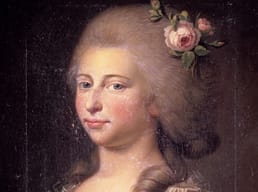
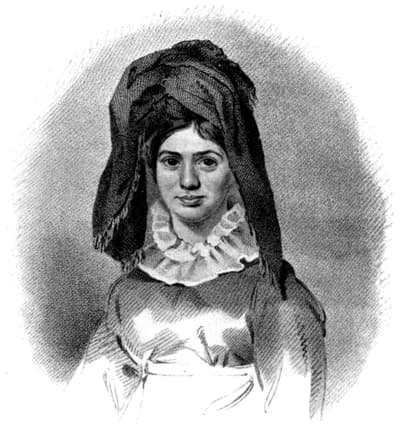
For more than two months, Caraboo lived as a local sensation. She performed dances described as Indonesian, prayed to a deity she called “Allah-Talla,” and sat for a portrait by Edward Bird in 1817. Bath reportedly held a ball for her.[1]
Her writing gave the deception a second life. Worrall sent samples of her strange script to Oxford for examination, as though scholars might locate Javasu in the shapes of the letters. Later accounts say the marks were dismissed as invented, but for a while they looked like evidence. They could be folded, posted, studied, and believed.[1][2]
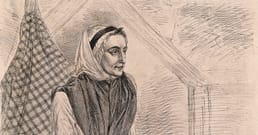
The exposure began with an image. A Bristol boarding house keeper saw a newspaper sketch of the supposed princess and recognized her as a former tenant. Caraboo was Mary Willcocks of Witheridge, Devonshire, the daughter of a cobbler, also later known as Mary Baker.[1][3]
After Javasu
Later summaries connect Mary Willcocks with charges including vagrancy and impersonation, imprisonment, and pardon.[3] Public fascination lasted longer than the scandal. The story later became the basis for the 1994 historical comedy-drama film Princess Caraboo, starring Phoebe Cates, Jim Broadbent, Wendy Hughes, Kevin Kline, John Lithgow, and Stephen Rea.[4]
Mary’s life after the hoax was quieter. She married Richard Baker in 1828, had a daughter named Mary Ann Baker, and died in Bristol in 1864. Her burial place is listed as Hebron Road Cemetery in Bristol.[3]
The sharpest part of the story is still the first scene: a woman at the edge of a Gloucestershire village, carrying soap and coins, speaking a language she had made for herself, while respectable people leaned closer and tried to hear a princess.