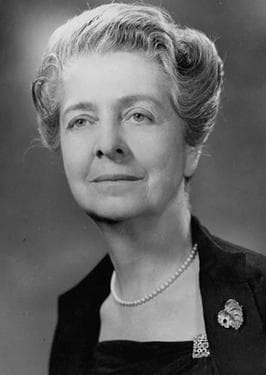
On a cold, dry Tuesday in December 1940, Rita Levi-Montalcini rode about 80 miles from Turin to Milan to buy a microscope. When she came back carrying a cake-sized box, two police officers stopped her at the Turin station. Wartime rationing had made panettone an illegal temptation. They opened the box and found no cake, only the instrument she needed to keep working.[3]
Rita Levi-Montalcini lost her university anatomy post under Italy’s 1938 anti-Jewish laws, then built a small bedroom laboratory and studied nerve fibers in chicken embryos. That improvised wartime research helped lead to the discovery of nerve growth factor, the work that earned her a share of the 1986 Nobel Prize.
Levi-Montalcini was 31 when she carried that microscope home. She had trained in medicine at the University of Turin, where neurohistologist Giuseppe Levi introduced her to the developing nervous system.[4] After earning her M.D. in 1936, she stayed on as his assistant in the anatomy department, working with embryonic tissue and the question of how a nervous system takes shape.[2]
In 1938, Benito Mussolini’s racial laws barred Jews from academic and professional positions, and Levi-Montalcini lost her assistantship.[2] She was not raised in the Jewish religion, but her Jewish ancestry was visible enough in fascist Italy to end her formal university work.[3] She left for Belgium in 1939, continued research on fertilized chicken eggs and vertebrate embryos, then returned to Italy after the outbreak of war made Europe more dangerous.[3]
A Laboratory Small Enough to Hide
Back in Turin, she moved into her childhood home with her mother, her twin sister Paola, and her brother Gino.[3] The apartment was large, but the world outside it was shrinking. Anti-Jewish restrictions limited work, school, and property rights.[3] Inside, Levi-Montalcini made a laboratory in her bedroom, later described in a scientific review as “a minuscule laboratory not unlike a convent cell.”[5]
Chicken embryos, glass slides, and the new microscope became the equipment of resistance. Levi-Montalcini studied the growth of nerve fibers in chicken embryos, using the home laboratory to continue experiments that official policy had tried to stop.[2] When bombs fell, she and her family took shelter in the cellar beneath their building, and she often brought her microscope and glass slides with her.[3]
In September 1943, after German forces invaded Italy, the family fled south to Florence.[2] Hiding there did not end the work. Levi-Montalcini set up another laboratory in a corner of shared living space and continued her embryology research under cramped, temporary conditions.[2] After Florence was liberated in August 1944, she volunteered for the Allied health service.[2]
By 1945, the family had returned to Turin.[2] The next year, Levi-Montalcini received an invitation for a semester of research at Washington University in St. Louis with Viktor Hamburger.[2] She duplicated results from her home experiments, and Hamburger offered her a research associate position.[2] She remained at Washington University for 30 years.[2]
The Bedroom Work That Kept Growing
In 1952, Levi-Montalcini isolated nerve growth factor, or NGF, after observations of certain cancerous tissues that caused unusually rapid growth of nerve cells.[2] Later collaborations with Hamburger and Stanley Cohen helped turn that line of work into a major finding in modern neurobiology.[5] In 1986, Levi-Montalcini and Cohen shared the Nobel Prize in Physiology or Medicine for the discovery of NGF.[1]
She later served as an Italian senator for life, from 2001 until her death in Rome in 2012.[1] She was also the first Nobel laureate to reach 100, a birthday marked at Rome’s City Hall in 2009.[1] Still, the sharpest image is smaller than any ceremony: a woman at a train station, holding a cake-sized box with a microscope inside.