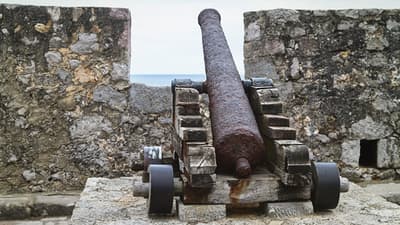
In 1962, somebody looked at a bowl of breakfast cereal and decided it needed artillery. The commercial fired bowls of cereal from a cannon in time with the finale of Tchaikovsky’s 1812 Overture, turning a Russian battle piece into a gag about oats and noise.[1]
Tchaikovsky’s 1812 Overture became famous for cannon shots and cathedral bells, but those sounds were far easier to imagine than to coordinate. Antal Doráti’s 1954 studio recording helped fix the timing problem by mixing orchestra, cannon fire, and bells into a controlled recorded performance.
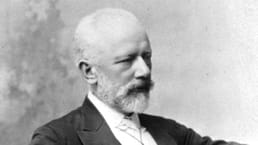
Tchaikovsky would probably not have found the cereal joke flattering. He described the overture as “very loud and noisy and completely without artistic merit,” a ceremonial commission he felt had been written without warmth or love.[1] Audiences heard victory. The composer heard bombast.
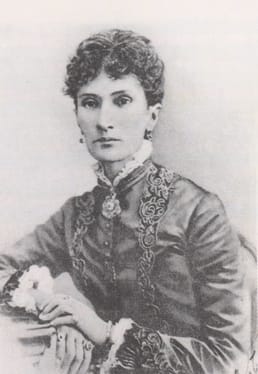
The commission arrived in 1880, when Nikolai Rubinstein wanted music for public celebrations in Moscow. The occasions around it included the All-Russian Arts and Industry Exhibition, the memory of Russia’s defeat of Napoleon, and the still-unfinished Cathedral of Christ the Saviour, built as a monument to 1812.[4] Tchaikovsky composed and orchestrated the work between September and November 1880, in roughly six weeks.[2][5]
The overture begins in prayer rather than explosion. Tchaikovsky opens with the Orthodox hymn “O Lord, Save Thy People,” scored for low strings, then lets Russian themes and the French “La Marseillaise” push against one another as the battle story gathers force.[4] By the finale, the music has become the part everyone remembers, brass, bells, and cannon effects stacked into public spectacle.[2]
The performance that could not quite happen
Concert organizers pictured something enormous outside the cathedral. A large brass ensemble would supplement the orchestra. The cathedral bells, along with bells from other Moscow churches, would ring on cue. Cannons with electrically wired ignition switches were supposed to fire at the right moments.[4]
The plan collapsed under its own machinery. The cathedral was not finished in time, the production was too ambitious, and the assassination of Emperor Alexander II in 1881 changed the ceremonial setting.[4] When the overture finally had its first public performance in Moscow on 20 August 1882, Ippolit Al’tani conducted it under a tent near the unfinished cathedral.[2] The piece that later became shorthand for spectacle began as a compromise.
Even the cannon legend is messier than the poster version. Tchaikovsky Research notes that the manuscript calls for bells and cannon, but Tchaikovsky also told his publisher that the theatre instrument he meant for the cannon effect was a large suspended drum used to imitate a shot, rather than necessarily a real cannon.[5] Later performances leaned into the more dramatic interpretation.
A real cannon is a poor orchestra member. It has safety rules, ignition delays, distance, smoke, and a habit of overwhelming whatever else is happening onstage. Bells bring their own stubborn timing problems. A cathedral bell tower does not respond to a conductor like a violin section.
The studio made the fantasy behave
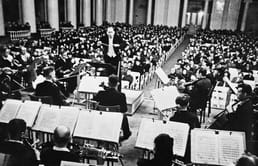
By the mid-twentieth century, recording offered a cleaner answer than the square outside a cathedral. In 1954, conductor Antal Doráti made a studio recording that mixed the orchestra with cannon fire and bells, allowing the explosive sounds to land with a precision that live performance could rarely promise.[2] The old dream became less dependent on weather, wiring, and luck.
After that, the overture kept acquiring new costumes. Woody Allen used it in Bananas. The Simpsons referenced it. Charlie Drake turned it into physical comedy. In 1974, Arthur Fiedler and the Boston Pops helped attach it to American Independence Day through a televised Fourth of July concert, and the overture became a familiar partner to fireworks far from Moscow.[1][2]
So Tchaikovsky’s unloved showpiece traveled a strange route, from a tent beside an unfinished cathedral to cereal advertising, television comedy, and summer fireworks. The composer complained about noise. The world kept waiting for the cannons.