Geronimo had already been dropped from the sky more than once, and the old male beaver seemed to understand the routine. Elmo W. Heter, a Fish and Game officer in McCall, Idaho, wrote that after each test drop someone picked Geronimo up on the flying field. Eventually, when handlers came near, he would crawl back into his wooden box and wait to go aloft again.[1]
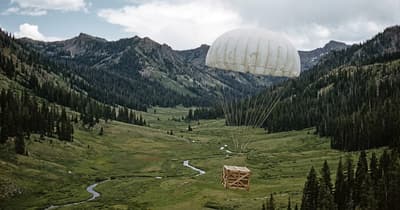
In 1948, Idaho Fish and Game moved 76 live beavers into remote backcountry by airplane and surplus parachute. The strange method was meant to be faster, cheaper, and less punishing than hauling boxed beavers for days by truck, horse, and mule.
Around farms, orchards, and irrigation works in Idaho, beavers cut trees and built dams where people did not want water slowed. Heter's department still valued the animals because a relocated beaver could build ponds, reduce erosion, improve fish and waterfowl habitat, and start a fur-bearing colony where the state wanted one.[1]
A trapped beaver on the old route might spend days in a cramped box on pack animals, ride in a dusty truck, wait overnight with a conservation officer, ride by truck again, and then go back onto horses or mules for the last mountain miles. Heter called the process arduous, prolonged, expensive, and high in beaver mortality.[1]
Heter's team built paired wooden boxes with breathing holes, landing latches, canvas harness, and surplus war gear. They used a 24 foot rayon parachute from Forest Service stock. A Travelair airplane could carry the pilot, a conservation officer, and eight crates of beavers toward small open meadows crossed by streams.[1]
After dummy weights proved the gear could fall correctly, Geronimo made the test alive, furry, and harder to ignore. Heter's paper is clinical until it is not: "Poor fellow!" he wrote, before noting that Geronimo later received a priority place on the first real flight into the backcountry with three young females.[1][2]
In the fall of 1948, 76 beavers went out by air toward Idaho meadows instead of over the old pack route. One died after working out of a box before it reached the ground. Late observations in 1949 found that all the airborne transplants had become well established, according to Heter.[1] The method looked comic from the outside, but the practical difference was blunt: fewer long rides, less handling, and a better chance that the animal inside the crate reached water alive.
Decades later, Idaho Fish and Game historian Sharon Clark helped find old film of the parachuting beavers. Boise State Public Radio reported that the department no longer drops beavers by airplane, although Idaho still moves problem beavers to places where their dams can help repair dry or damaged habitat.[3] The Guardian, citing the rediscovered footage, described the same unlikely image: travel boxes, a plane, and beavers descending into the backcountry.[4]
In that first meadow, Geronimo stayed in his crate while the younger beavers inspected the stream. The old test pilot had already done the ridiculous part. Idaho's joke, if it is a joke, rests on a serious little reversal: the gentler route was the one that fell out of the sky.