Before William Crush sent two locomotives charging into each other, he took them on tour. One was painted bright green, the other brilliant red. Thousands of Texans came out to look at the engines that the Missouri-Kansas-Texas Railroad was advertising for destruction. The company could sell them a ride to see the wreck.[1]
Crush, the railroad's passenger agent, had proposed the stunt to his bosses in 1895. Admission would be free. Getting there on the Katy, as the railroad was known, cost $2 for a round trip from anywhere in Texas. For that fare, a passenger could watch two old locomotives collide head-on on a special track north of Waco.[1]
By early September 1896, five hundred workers were building a place to receive the customers. They laid four miles of track and erected a grandstand, telegraph offices and a reporters' platform. A borrowed circus tent became a restaurant. Visitors could buy lemonade, watch medicine shows or try the midway games while they waited. The depot had a platform 2,100 feet long and a sign announcing the destination: Crush, Texas.[1]
On September 15, thirty-three excursion trains delivered the audience, with some passengers riding on the roofs because the cars were full. Crush had told a reporter he expected about 20,000 people. More than 40,000 arrived. Police kept most spectators at least 200 yards from the track; journalists could stand within 100 yards. Before the run, the engines met slowly in the middle for photographs, then backed away to their starting points.[1][2]
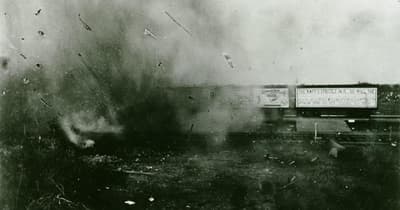
At five o'clock, Crush rode a white horse to the center of the track, raised his white hat and brought it down. The crews set their engines running and jumped clear. When the trains struck, smashed timber and metal flew into the air. Then both boilers exploded. Pieces of iron and steel fell among the people who had paid to come and watch.[1][2]
Waco photographer Jarvis Deane lost an eye. Accounts disagree about the death toll: Waco History reports two people killed, while the Texas State Historical Association records the deaths of two men and a woman. Both describe serious injuries among the spectators. The railroad began settling claims with cash and lifetime passes.[1][2]
That evening the Katy fired Crush; the next day it hired him back. He stayed with the company until retirement. At the wreck site, souvenir hunters carried away metal, some burning their hands on it. Railroad crews removed the larger wreckage, and workers dismantled the stands and tents. By nightfall the temporary destination had disappeared.[1][2]
Within a month, Scott Joplin had copyrighted a piano march dedicated to the same railroad. Whether he saw the crash himself remains uncertain, but his score gave pianists instructions for recreating it. Near the end came the running trains, a crossing whistle and a final warning whistle. Beneath the music, Joplin supplied the next direction: "The collision."[3]
Sources
- Texas State Historical Association: Crash at Crush
- Waco History: Crash at Crush
- Baylor Digital Collections: Scott Joplin and the Great Crush Collision March
Photo: Jervis C. Deane, the boiler explosion at Crush, Texas, September 15, 1896. Public domain, via Wikimedia Commons. Cropped for format.