In 1913, William DeMille wrote to his younger brother as if the man had boarded a train toward professional embarrassment. Cecil B. DeMille was leaving New York to make The Squaw Man, and William could not see why anyone would attach his name to “a cheap form of amusement.” If Cecil got stranded out West, William added, he would send railroad fare home, “as usual.”[1]
Hollywood became America’s movie capital partly because independent filmmakers moved west to escape Thomas Edison’s patent power. Los Angeles offered distance from East Coast lawsuits, plus sunshine, cheap land, open space, and scenery that made daily filmmaking easier.
Edison’s hold on early film began in West Orange, New Jersey, where he patented the Kinetograph camera and Kinetoscope viewer in 1891, then opened the Black Maria studio two years later.[2] His operation went on to produce nearly 1,200 films, including an early Frankenstein.[2]
By the time the business grew, Edison had joined other patent holders in the Motion Picture Patents Company. The group used patent and copyright lawsuits to pressure rival producers and limit competition, creating a legal choke point for independents who wanted to make and show movies outside the approved system.[2]
That pressure was harder to apply across a continent. Edison’s base of power was in the East, while California sat far from his legal machinery.[2] Southern California also had advantages that mattered every shooting day: reliable sun, varied landscapes, cheap land, and enough room for studios to spread out.[3] A desert, coastline, farm, or mountain setting could be found without sending a company halfway across the country.[3]
A Sober Town Meets the Movie Business
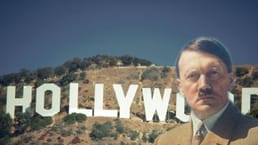
Hollywood did not begin as a dream factory. In 1886, Harvey and Daeida Wilcox bought 120 acres northwest of Los Angeles and imagined a quiet, religious community.[4] Their fig-farm plan failed, so they divided the land and sold it as real estate to buyers who shared their sober ideals.[4]
The filmmakers who arrived later were chasing a different kind of safety. Many independents settled in the newly incorporated Los Angeles neighborhood because it put thousands of miles between their cameras and Edison’s East Coast enforcement efforts.[2] The palm trees helped, but the more urgent attraction was the chance to keep filming without being boxed in by patent claims.
Cecil B. DeMille’s trip shows how accidental the map could still be. His crew first aimed for Flagstaff, Arizona, while making The Squaw Man.[1] In the often-told version, cold weather helped push the production onward to Southern California, where the film became tied to the early rise of feature filmmaking in Los Angeles.[1] His brother’s pitying letter now reads less like wisdom than a postcard from the wrong future.
After Edison’s Grip Loosened
Edison’s lawyers did not disappear when filmmakers crossed the desert. West Coast producers continued to face pressure until the 1915 case United States v. Motion Picture Patents Co., which limited the company’s ability to use patents to block rival moviemakers.[2] With that obstacle weakened, the industry already gathering around Los Angeles had more room to grow.
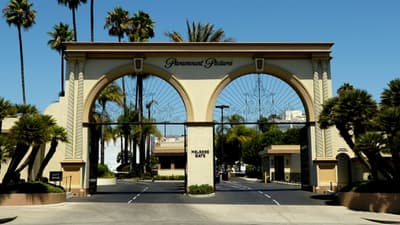
By the 1910s and 1920s, major studios were taking shape, including Paramount, Universal, Warner Bros., MGM, and what became 20th Century Fox.[3] They built a system that controlled production, distribution, and exhibition, and relied on contract actors, in-house directors, writers, cinematographers, editors, musicians, and backlot crews.[3]
So Hollywood’s rise was not simply the story of artists discovering better light. It was also a story of distance, lawsuits, farmland, weather, and people carrying cameras away from New Jersey. The Wilcoxes’ sober acreage became a place where filmmakers could point a lens at the sun and, for a while, stay ahead of Edison’s paperwork.
Sources
- PBS SoCal, “How Did Hollywood End Up in...Hollywood?”
- History Facts, “Hollywood was established in Los Angeles to get away from Thomas Edison”
- HowToFilmSchool.com, “Early Hollywood: The Birth of Studio Storytelling (1910-1930)”
- The Saturday Evening Post, “Thomas Edison: The Unintentional Founder of Hollywood”