Ben Goldacre paid $60 and signed up Henrietta, his dead cat, as a professional member of the American Association of Nutritional Consultants. The organization accepted the application, turning a household pet into a credentialed nutrition consultant on paper.[1]
Physician and science writer Ben Goldacre questioned Gillian McKeith’s American Association of Nutritional Consultants credential by showing that the same organization accepted his deceased cat Henrietta as a professional member.
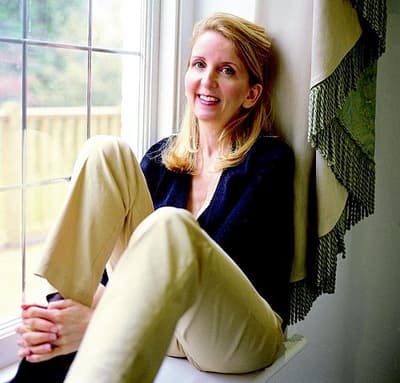
Gillian McKeith was not an obscure figure arguing about bran in a village hall. She was a Scottish television personality and writer, best known for Channel 4’s You Are What You Eat, which ran from 2004 to 2006, and later for other health and diet programs.[2] Her public persona rested on certainty: food could explain the body, the body could be read, and the right diet could put things right.
On television and in print, McKeith promoted familiar-sounding advice about fruit, vegetables, grains, beans, nuts, tofu, and avoiding processed foods, sugar, fat, red meat, alcohol, caffeine, white flour, and additives.[2] The controversy came from what surrounded that advice. Her work was criticized for pseudoscientific claims, including detox diets, colonic irrigation, and the idea that ailments or dietary needs could be identified by examining tongues and stool samples.[2]
Goldacre, a British physician and science writer, looked at the paperwork behind that authority. McKeith was a member of the American Association of Nutritional Consultants, an Indiana-based organization for nutritional and dietary consultants.[1] Accounts of the group say it did not restrict membership to people with verifiable credentials and ran no checks on applicants’ qualifications.[1]
Henrietta made the weakness plain. Goldacre subscribed his deceased cat as a professional member, and the association accepted her.[1] The joke was easy to understand, but the target was serious: if a dead cat could pass through the credentialing gate, the gate was not measuring much.
Other animals had made the same point. Australian nutritionist Rosemary Stanton obtained membership for her late Old English Sheepdog.[1] Nutrition scientist Victor Herbert had earlier subscribed a poodle and a cat, and, after publicity around the episode, was reportedly able to subscribe another dog the next year.[1] Other examples included a pet hamster and a person accepted after providing only a certificate from a nutrition diploma mill.[1]
McKeith’s broader credentials also drew scrutiny. One summary of her background states that she had no qualifications in nutrition or medicine from accredited institutions, and that in 2007 she agreed with the Advertising Standards Authority to stop using the title “Doctor.”[3] She rejected the claim that using the title to promote her nutrition theories was unethical.[3]
For viewers, credentials can work like stage lighting. They do not create expertise, but they change how expertise appears. A television host surrounded by tests, samples, diet plans, and confident diagnoses can seem to carry institutional weight, even when one of the institutions behind the image has accepted a cat.
The New York Times later pointed to the association’s unreliability in a review discussing Goldacre’s book and McKeith’s membership, while Quackwatch’s Stephen Barrett criticized the group for offering memberships to unqualified individuals.[1] The episode endured because it reduced a credentialing problem to something almost impossible to misunderstand: a fee, an application, an acceptance, and Henrietta’s name where a qualified consultant’s should have been.