In 1952, the British public found something to be indignant about inside the Post Office budget: the cats had not had a raise since 1873. Their allowance had sat untouched for nearly eighty years, while the animals kept doing the old work of government, patrolling offices for mice.[1]
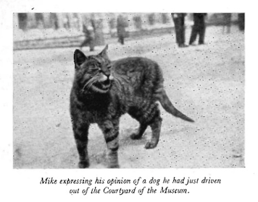
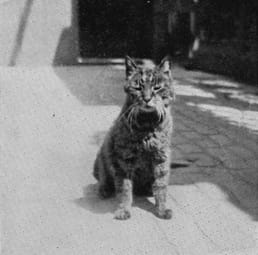
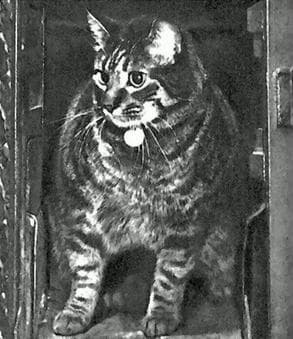
Tibs the Great was the British Post Office’s “number one cat,” serving at its London headquarters from 1950 to 1964 and reportedly keeping the building completely mouse-free. His career belonged to a formal line of paid Post Office cats that began in 1868.
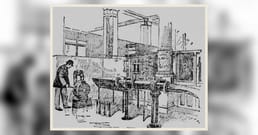
In September 1868, three cats were put on a six-month trial in the London Money Order Office. Each received one shilling a week to catch rodents.[1] The wording matters because this was not a fond office joke that later hardened into legend. It was pest control entered into the routines of a public institution.
By 7 May 1869, the official verdict had the dry satisfaction of a completed memo: “the cats have done their duty very efficiently.”[1] By 1873, the weekly allowance had gone up to 1s 6d, and cats were being employed in other post offices as well.[1] Then, according to the later complaint, the pay simply stayed there.
That made the 1952 fuss wonderfully specific. The grievance was not about a minister, a clerk, or a department. It was about official mousers, animals with a place in the public system, going generations without a raise. The issue was later raised in the House of Commons, which gave the Post Office cat budget a dignity it probably never expected.[1]
The Cat at Headquarters
Tibs entered that system in 1950. He was thought to have been born in London in November of that year, the son of Minnie, another cat remembered as a “fine cat.” His father was unknown.[1] The record gives him the sort of sparse biography usually reserved for people in public office: birthplace, parentage, term of service, death.
At Post Office headquarters in London, Tibs became the institution’s “number one cat.” He was appointed by Alf Talbut and served while a succession of Postmasters General came and went, including Ness Edwards, Herbrand Sackville, Charles Hill, Ernest Marples, and Reginald Bevins.[1]
The claim attached to him is wonderfully absolute. From 1950 to 1964, Tibs kept the headquarters completely mouse-free.[1] A mouse in a kitchen is a nuisance. A mouse in the headquarters of a national postal system is something more embarrassing, a small animal interrupting a machine built to move letters, money orders, forms, and authority.
Tibs’s job was to prevent that embarrassment. He did not need a desk or a title in gilt lettering. He needed corridors, corners, and the patience of an animal whose work was visible mainly when nothing happened. No mice in the files. No mice in the rooms. No mouse problem for anyone higher up to explain.
An Obituary for a Mouser
Tibs died in London in December 1964, aged fourteen.[1] Several newspapers ran an obituary for him, a final courtesy that makes sense only because his life had already been treated as public service.[1]
The Post Office cat system began with three trial employees and a weekly shilling. Nearly a century later, it had produced a named headquarters mouser whose pay became a public issue and whose death made the papers. In the long ledger of the British Post Office, Tibs the Great remains there, not signing forms or answering questions in Parliament, simply keeping the corridors mouse-free.