Around three in the morning, Robert Smalls did not run for the trees. He lit the boilers.
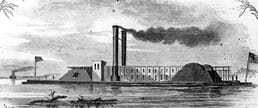
In 1862, Robert Smalls, an enslaved pilot in Charleston Harbor, took over the Confederate transport Planter, picked up his family, used the right harbor signals, and delivered the ship to the U.S. Navy.
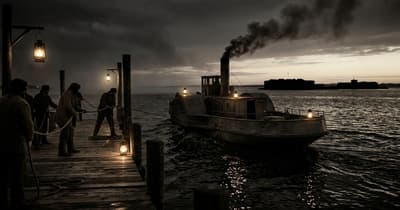
The white officers of the Planter had gone ashore for the night, leaving Smalls and the enslaved crew on board. The National Park Service says Smalls and the other freedom seekers fired up the ship, moved to a wharf for waiting family members, then steered toward the harbor forts that guarded Confederate Charleston.[1]
Charleston Harbor had taught Smalls the route his enslavers never imagined him using for himself. The Confederate army used the Planter as a transport, and Smalls worked as its pilot there.[1] He knew where the water ran safe, what signals the forts expected, and how a boat could look ordinary in the dark.
As the ship steamed past Fort Sumter and Fort Moultrie, Smalls wore a captain's hat and gave the proper signals, according to the Park Service account.[1] Sixteen enslaved people were on board by then. The House history office records that the group included Smalls's wife and child, four other women, another child, and the enslaved crew who helped take the vessel.[2]
Before the war, Hannah Jones's owner had named a price for her freedom: 800 dollars. The American Battlefield Trust says Smalls had tried to buy freedom for his wife, but saving that sum would have taken years.[3] Years were not something an enslaved family could count on. So the plan became physical: coal, steam, a wharf, a hat, a channel, a set of signals.
The House history office describes the Planter as a well stocked ammunition transport, and the Park Service notes that Smalls also gave valuable intelligence about Confederate operations around Charleston Harbor.[2][1] At the Union blockade, he handed over more than a stolen boat. The act made him famous in the North. Later, he piloted Union vessels, was promoted to captain, and after the war served in South Carolina politics and in the U.S. House of Representatives.[1][2]
On April 14, 1865, Smalls piloted the Planter back to Fort Sumter with visitors for the ceremony that raised the U.S. flag there again.[2] A life that began under people who sold labor and family had moved, by water, into public record. The first turn still matters because of its precision. Freedom depended on a man knowing the habits of the people who thought they owned him: when they slept ashore, which signal would pass inspection, and how long a stolen ship could keep looking like it belonged exactly where it was.
The Planter crossed the harbor that morning as a family escape, a military prize, and a proof of knowledge hidden in plain sight. Smalls had taken the tools of his captivity and sailed them past the forts, one correct signal at a time.
Sources