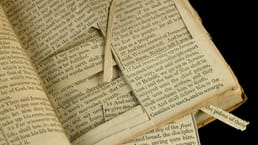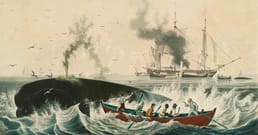

The volume held at the Museum of the Bible in Washington, D.C., is titled Parts of the Holy Bible, selected for the use of the Negro Slaves, in the British West-India Islands [1]. Its editors cut most of the Old Testament and left only about half of the New Testament [1]. The abbreviation served a purpose: enslaved Africans in Jamaica, Barbados, and Antigua would not read or hear passages that might encourage rebellion [1]. The book is commonly called the Slave Bible, and only two other known copies survive [1].
British planters in the Caribbean had long been wary of missionaries, and they may have demanded that missionaries teach enslaved people only selected parts of the Bible [1]. Some missionaries may also have believed that only excerpts reinforcing enslaved status were appropriate [1]. Anthony Schmidt, a curator at the Museum of the Bible, said the editors were 'really highlighting portions that would instill obedience' [1]. The exact person who directed the changes is not clear [1].
The first Slave Bible was published in 1807, three years after the Haitian Revolution ended [1]. That revolution was the only slave revolt in history in which enslaved people successfully drove out their European oppressors and formed a new nation [1]. The event increased American and European paranoia that oppressed people would rise up [1]. Missionaries and planters may have thought Christianity, at least certain parts of it, would protect against revolutions by teaching enslaved people to respect their masters [1].
The Slave Bible includes Joseph's enslavement in Egypt but omits Moses leading the Israelites to freedom [1]. It also leaves out the part where Moses tells Pharaoh to 'Let my people go' [1]. Those omissions removed a central biblical story of liberation from bondage [1]. The same selective logic kept out verses that condemn slave owners while retaining verses that tell servants to obey their masters [1].
The Slave Bible appeared during a wider nineteenth-century argument over scriptural authority. Presbyterian theologian Charles Hodge, who became principal of Princeton Theological Seminary in 1851, advocated for the Bible as the Word of God [2]. Abolitionists read the same book for different ends. Frederick Douglass delivered 'What to the Slave Is the Fourth of July?' at Corinthian Hall in Rochester, New York, on July 5, 1852, and the speech included acute textual analysis of the Christian Bible [3].
The 1807 volume was designed for the British West-India Islands, and its title page named that use directly [1]. The Museum of the Bible in Washington, D.C., displays one copy [1]. Only two other known copies exist [1]. The survival of so few copies makes the book a rare physical record of how planters and missionaries tried to shape religious instruction [1].
The omissions in the Slave Bible did not erase the Bible's abolitionist uses. Douglass's 1852 speech treated the Christian Bible as part of his indictment of American slavery [3]. The Slave Bible's editors, by contrast, removed Moses and the Exodus while keeping Joseph in Egypt [1]. The result was a scripture tailored to obedience, not liberation [1].