When news reached land that two tea clippers were nearing London in September 1866, their owners and agents met to settle who would claim the prize. Out at sea, the captains were still fighting for every advantage. On land, the worry was that an exceptionally close finish might give the tea merchants an excuse to pay neither ship.[1]
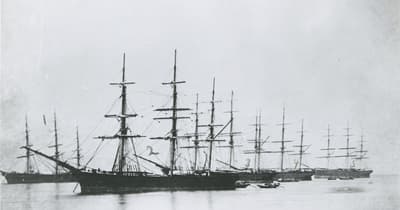
At the Pagoda Anchorage near Fuzhou that season, sixteen clippers had gathered to load tea. Their route to Britain ran around southern Africa and back up the Atlantic.[4][2] Buyers believed the fresher, earlier-picked tea made the better drink, and a merchant could charge for arriving before his competitors. Far from the cargo holds, people in Britain were betting on which ship would bring it home first.[3]
On Ariel, Captain John Keay and his crew spent the opening part of the passage shifting heavy stores and moving some of the tea into the after cabin. They were adjusting the ship's balance to improve her steering and sailing.[2] Winning could begin with the unglamorous business of finding a better place for a barrel or a chest. Every improvement had to carry all the way to a dock in London.
By daybreak on September 5, Keay could see another vessel carrying a great spread of sail behind him in the English Channel. He recognized his rival. For the rest of the day, Ariel and Taeping ran toward London together, with Ariel holding the lead. After months of work, the other ship was still right there.[1]
Near Dungeness the next morning, both captains signalled for pilots to guide them onward. When Taeping threatened to get ahead, Keay manoeuvred to protect his place. He secured the first pilot. Then the ships called for steam tugs, and Taeping got the better one.[1]
At the Thames docks, Ariel arrived outside the East India Dock gates before Taeping reached her own destination farther upriver. But Ariel had to wait for enough water. Taeping drew less and could enter her lock sooner.[1][2] Keay had protected his lead through the Channel and fought for the first pilot. Now he was outside a gate, waiting for the river to rise.
In Keay's journal, quoted by maritime historian Basil Lubbock, the owners' agreement has a more anxious explanation than a generous handshake between rivals. The tea was selling at a loss. If both ships claimed the extra freight payment, the merchants might argue that neither qualified as the first arrival. The backers agreed that one would claim and the other would keep quiet.[1]
After a 99-day passage from China, the ships docked less than half an hour apart.[1][2] Taeping collected the premium and divided it with Ariel; her captain also shared his £100 prize with Keay.[1] The men who had raced each other across oceans could both go home with something. By midnight, tea samples were being tossed ashore from the two ships. Serica, another competitor, had arrived on the same tide and squeezed into the West India Dock before its gates closed.[1] By the time the gates shut, three racing crews had brought their tea to the same city on the same tide.