Ellis Hughes did not find the Willamette Meteorite so much as begin negotiating with it. In 1902, after recognizing the iron mass on land owned by the Oregon Iron and Steel Company, he tried to move it quietly onto property where he could claim it. The job took 90 days and covered about three quarters of a mile.[1]
In 1902, Ellis Hughes spent 90 days secretly dragging the Willamette Meteorite toward his own property. The huge iron rock later became a museum treasure in New York, while the Confederated Tribes of Grand Ronde kept pressing its sacred name, Tomanowos, back into the record.
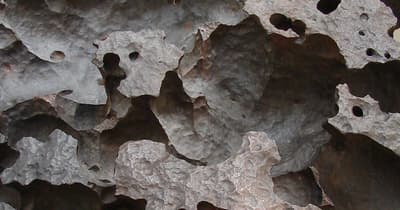
Ninety days is a long time to hide a rock that weighs in the neighborhood of 15 tons. Hughes was not slipping a specimen into a coat pocket. He was dragging a pitted, blackened mass big enough to become a museum centerpiece, over Oregon ground slowly enough that secrecy had to be renewed every time the homemade rig moved another few yards.[1]
The lawsuit arrived after the move was discovered. Oregon's Supreme Court held that the Oregon Iron and Steel Company owned the meteorite, not Hughes. In 1906, the American Museum of Natural History bought it from the company for $20,600 and made it part of its New York collection.[1][2]
For the Confederated Tribes of Grand Ronde, the object already had a name and a life before the court file. Tomanowos is associated with spirit power in Clackamas Chinook, and OPB reported that Grand Ronde tradition treated water collected in its hollows as part of cleansing and healing practices.[1][3]
A Native witness in the Hughes litigation said the meteorite had belonged to Indigenous ancestors long before Hughes found it near the property line. He described young men being sent to the stone at night as a rite of passage, which leaves Hughes's 90 day haul looking less like a private stunt than a noisy new chapter in an older argument over belonging.[1]
By 2000, the dispute had changed rooms. The Grand Ronde sought the meteorite's return under federal repatriation law, and the museum went to court to keep it. The settlement left the 15.5 ton meteorite on display in New York, added recognition of its Native religious importance, gave the tribe ceremonial access, and promised transfer to the tribe if the museum ever stopped exhibiting it.[2]
A smaller piece found its way home in 2019, when the Evergreen Aviation and Space Museum returned a fragment of Tomanowos to the Confederated Tribes of Grand Ronde.[3] The large meteorite still sits under museum lights, its surface full of dark basins where water once gathered. Hughes tried to move it by inches. A century later, the part that kept moving was the question of who gets to say what the rock is.